
How Can US Law Firm Websites Increase Their Conversion Rates Without Being Too Aggressive?
Why Conversion Rates Matter for Lawyer and Law Firm Websites
A US law firm website should do more than simply describe legal services. It should help potential clients feel informed, comfortable, and ready to contact the firm when they need legal help. Conversion rates measure how often website visitors take an action such as filling out a contact form, calling the office, or requesting a consultation. Strong conversion rates can help a law firm grow without relying on hard selling techniques or pressure tactics.
Many people searching for legal representation are dealing with stressful situations. They may be injured, facing criminal charges, dealing with family disputes, or worried about financial problems. Aggressive marketing tactics often create distrust because visitors already feel overwhelmed. A better approach is to create a website experience that builds confidence and provides clear guidance.
You can improve the conversion rate of your lawyer and law firm websites by making your digital storefronts easier to use, more informative, and more trustworthy. Small improvements in design, communication, and user experience often lead to significant increases in leads and consultations.
Make The Website Easy To Navigate
One of the most important steps is improving website navigation. Visitors should immediately understand what the law firm does and how they can find the information they need. A confusing website often causes people to leave before contacting the firm.
Simple navigation menus work best. Practice areas should be clearly listed, and important pages such as attorney profiles, contact information, and case results should be easy to access. Avoid cluttered menus with too many options. Organizing content into logical categories helps visitors quickly move through the site.
The homepage should clearly explain the firm’s services and who the firm helps. Visitors should not have to search through multiple pages to understand whether the firm handles their type of case.
Internal links also improve usability. For example, a personal injury page can link to car accident, truck accident, and wrongful death pages. This keeps visitors engaged and helps them find more detailed information.
Improve Your Lawyer Website’s Speed And Mobile Performance
Website speed directly affects conversion rates. If pages load slowly, visitors may leave before reading the content. Fast websites create a smoother experience and encourage users to stay longer.
Law firms should optimize image sizes, reduce unnecessary plugins, and use reliable website hosting. Simple website designs often perform better than pages overloaded with animations or large graphics.
Mobile optimization is equally important. Many potential clients search for lawyers on smartphones. A website that looks good on desktop computers but functions poorly on mobile devices can lose valuable leads.
Buttons should be easy to tap, text should be readable without zooming, and forms should work smoothly on smaller screens. Mobile users should also be able to call the office with a single click.
Testing the website regularly on different devices helps identify problems that may hurt conversions.
Build Trust With Potential Clients and Their Families with Helpful Content
Trust is one of the biggest factors influencing whether someone contacts a law firm. Informative content helps establish credibility without sounding overly promotional.
Practice area pages should answer common client questions in plain language. Instead of filling pages with complicated legal terms, firms should explain legal processes clearly and directly. Visitors often appreciate practical information that helps them understand what to expect.
Frequently asked questions sections can also improve conversions. These sections address concerns potential clients may hesitate to ask during an initial consultation.
Educational blog posts are another valuable tool. Articles about accident claims, divorce procedures, estate planning, or criminal defense issues can demonstrate knowledge while helping visitors solve problems.
Helpful content positions the law firm as a trusted resource rather than a business focused only on attracting leads.
Use Clear And Calm Calls To Action
Calls to action are important, but they do not need to feel aggressive. Many law firm websites use pressure-based phrases that can make visitors uncomfortable. Instead of demanding immediate action, firms can encourage communication in a supportive and professional way.
Simple calls to action often work best. Examples include:
- Schedule a consultation
- Speak with our legal team
- Contact us to discuss your case
- Learn your legal options
These phrases sound informative and approachable rather than forceful.
Calls to action should appear naturally throughout the website. Contact buttons can be placed near practice area descriptions, attorney profiles, and blog posts. Visitors should never struggle to figure out how to reach the firm.
Contact forms should also remain simple. Asking for too much information can reduce submissions. Most forms only need basic details such as name, phone number, email address, and a short description of the issue.
Highlight Real Attorney Profiles
Potential clients want to know who will handle their case. Attorney profile pages are often among the most visited sections of a law firm website.
Strong attorney profiles help humanize the firm. Professional photos, clear biographies, and descriptions of experience can build confidence. Visitors often respond well to attorneys who appear approachable and knowledgeable.
Profiles should focus on both professional qualifications and communication style. Clients want to know that their attorney understands their concerns and will keep them informed.
Adding information about courtroom experience, certifications, speaking engagements, or community involvement can also strengthen credibility.
Video introductions can further increase trust. Short videos where attorneys explain their approach or discuss common legal concerns often create a more personal connection.
Display Reviews And Testimonials Carefully
Client reviews and testimonials are powerful trust signals. However, the presentation matters. Overly dramatic claims can appear unrealistic or exaggerated.
Instead, law firms should focus on authentic feedback that highlights communication, professionalism, and client support. Testimonials that describe positive experiences in simple language often feel more credible.
Reviews from platforms such as Google can also help reassure visitors that the law firm has a strong reputation.
Case results may also increase confidence, but firms should present them responsibly. Avoid making promises or implying guaranteed outcomes. Instead, explain that every case is different while showing examples of past successes.
Displaying awards, professional memberships, and certifications can further support credibility when presented in moderation.
Create Strong Practice Area Pages
Many law firm websites lose conversions because their practice area pages are too vague. Generic content does not answer the questions potential clients actually have.
Each practice area page should focus on a specific legal issue and explain how the firm helps clients in those situations. Clear explanations reduce uncertainty and encourage visitors to take the next step.
Effective practice area pages often include:
- A simple overview of the legal issue
- Common challenges clients face
- Information about the legal process
- Possible compensation or outcomes when appropriate
- Answers to frequently asked questions
- Contact information for consultations
Content should remain conversational and easy to read. Long blocks of dense legal language often discourage users.
Breaking information into short sections with headers improves readability and helps visitors scan the page quickly.
Make Contact Information Highly Visible
Some law firm websites unintentionally hide contact information. Visitors should never need to search for a phone number or contact page.
Phone numbers should appear at the top of the website and remain visible throughout the browsing experience. Email addresses, office locations, and consultation request forms should also be easy to access.
Live chat features can improve conversions when used appropriately. Many visitors appreciate quick answers to basic questions before committing to a consultation.
However, live chat should remain professional and supportive rather than intrusive. Aggressive chat popups that repeatedly interrupt browsing may push visitors away.
Providing multiple contact options helps users choose the communication method that feels most comfortable.
Use Professional And Consistent Design
Website design strongly influences first impressions. An outdated or cluttered website may create doubts about the law firm’s professionalism.
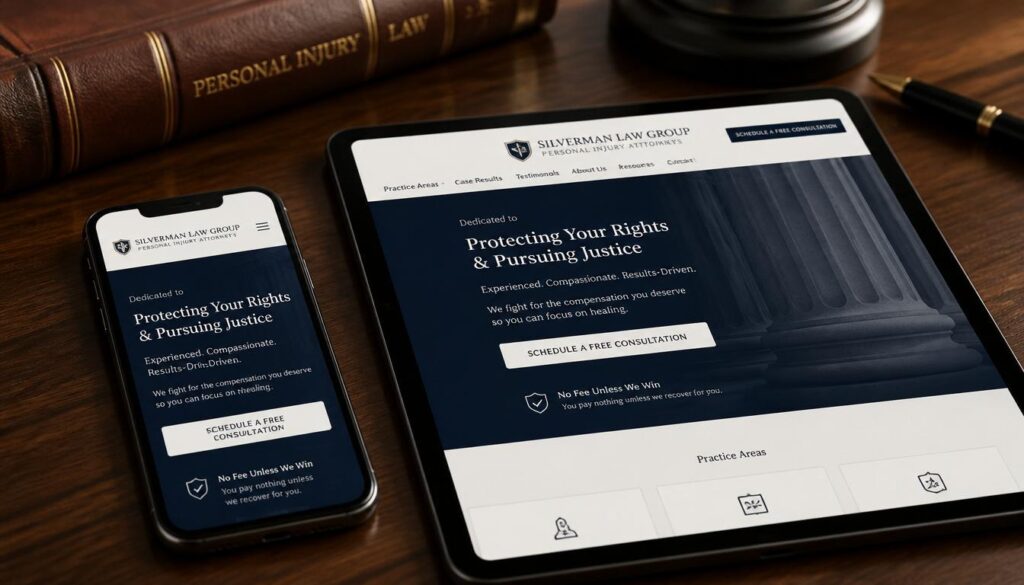
A clean and modern design often performs better than overly flashy layouts. Consistent fonts, balanced spacing, and organized content help visitors focus on the information.
Law firms should avoid excessive animations, autoplay videos, or distracting popups. These features may frustrate users and reduce trust.
Professional photography also improves credibility. Authentic office and attorney photos generally perform better than generic stock images.
Consistency matters throughout the website. Matching colors, formatting, and messaging create a polished appearance that supports the firm’s reputation.
Add Local Information And Community Connections
Potential clients often prefer working with lawyers who understand their local area. Including local information can strengthen trust and improve search visibility.
Law firms can mention the courts, cities, and communities they serve. Location-specific pages may also help users feel more confident that the firm understands local legal procedures.
Community involvement can further increase credibility. Sponsorships, volunteer activities, speaking events, and charitable work show that the firm actively participates in the community.
Local references should feel natural rather than overly promotional. Authentic community connections often resonate more strongly with visitors.
Improve Transparency Throughout The Website
Transparency helps reduce hesitation. Many potential clients worry about legal costs, timelines, and uncertainty.
Law firms can improve conversions by clearly explaining what clients can expect during the consultation process. Information about contingency fees, billing structures, or general case timelines may help visitors feel more comfortable reaching out.
Transparency also applies to communication expectations. Visitors want reassurance that the law firm will respond promptly and keep them informed.
Simple explanations about how consultations work can make the process feel less intimidating.
Avoid exaggerated claims such as guaranteeing results or calling the firm the best in the area. Honest and realistic messaging often builds stronger trust.
Use Data And Analytics To Identify Problems
Improving conversion rates requires ongoing analysis. Law firms should regularly review website performance data to understand how visitors interact with the site.
Analytics tools can reveal:
- Which pages attract the most traffic
- Where visitors leave the website
- Which forms receive the most submissions
- How mobile users behave
- Which content generates consultations
Heatmaps and session recordings can also identify usability problems. For example, users may stop scrolling before reaching a contact form or become confused by navigation elements.
Testing different page layouts, headlines, or calls to action can help determine what works best.
Small adjustments often produce measurable improvements over time.
Focus On Client Experience Instead Of Pressure
The most effective law firm websites prioritize the visitor experience. People searching for legal help often want reassurance, clarity, and professionalism.
Aggressive tactics such as countdown timers, excessive popups, or fear-based messaging may generate short-term attention, but they can also damage credibility.
A calm and informative approach usually creates better long-term results. Visitors are more likely to contact a law firm when they feel respected and informed.
Every part of the website should support the client experience, from navigation and design to content and communication.
Law firms that consistently provide helpful information and easy communication pathways often develop stronger relationships with potential clients before the first consultation even begins.