
What Types of Content Should Every Law Firm Website Include?
A law firm website is often the first impression potential clients have of a legal practice. Before someone calls a lawyer, schedules a consultation, or fills out a contact form, they usually visit the firm’s website to learn more. People want answers to their legal questions, reassurance about the attorney’s experience, and confidence that the law firm can help them solve a problem.
Modern law firm websites are no longer just online brochures. They are marketing tools, lead generation platforms, trust-building assets, and educational resources all at the same time. A well-designed website with the right content can help attorneys attract better leads, improve search engine rankings, increase phone calls, and build long-term credibility.
The problem is that many law firm websites still lack important content. Some sites only include a homepage and a contact page. Others use outdated information or fail to answer the questions potential clients are searching for online.
Every law firm website should include specific types of content that improve user experience, support SEO, and help convert visitors into clients. The right content also helps establish authority in competitive legal markets.
This article explains the most important types of content every law firm website should include.
A Strong Homepage
The homepage is one of the most important pages on a law firm website. It is often the first page visitors see when they arrive from Google search results, online ads, social media, or referrals.
A strong homepage should immediately explain:
- • What the law firm does
- • What types of cases the firm handles
- • Where the firm is located
- • Why potential clients should trust the firm
- • How visitors can contact the office
The homepage should use simple language that is easy to understand. Legal jargon can confuse users and cause them to leave the site.
A good homepage usually includes:
- • A clear headline
- • Short summaries of practice areas
- • Attorney introductions
- • Client testimonials
- • Contact information
- • Calls to action
- • Awards or memberships
- • Links to important pages
The homepage should also be visually clean and mobile-friendly. Many people searching for legal help use smartphones, especially during emergencies.
Practice Area Pages
Every law firm website should have dedicated pages for each practice area.
Instead of placing all services on one page, firms should create separate pages for each legal service they offer. This helps both users and search engines better understand the website.
For example, a personal injury law firm may have separate pages for:
- • Car accidents
- • Truck accidents
- • Motorcycle accidents
- • Slip and fall injuries
- • Wrongful death
- • Medical malpractice
A family law firm may have pages for:
- • Divorce
- • Child custody
- • Child support
- • Adoption
- • Spousal support
- • Property division
These pages help improve local SEO because they allow the firm to target specific legal keywords.
Each practice area page should explain:
- • What the legal issue involves
- • Common causes or situations
- • The legal process
- • Possible outcomes
- • How the attorney can help
- • Why clients should choose the firm
Adding FAQ sections to practice area pages can also improve search visibility and user engagement.
Attorney Biography Pages
Potential clients want to know who will represent them.
Attorney biography pages help build trust and create personal connections with website visitors. These pages give law firms an opportunity to show experience, education, achievements, and personality.
Every attorney bio page should include:
- • Professional headshots
- • Education
- • Bar admissions
- • Legal experience
- • Practice areas
- • Awards and memberships
- • Publications or speaking engagements
- • Community involvement
- • Personal background information
Adding personal details can help humanize attorneys. Clients often prefer lawyers who appear approachable and relatable.
Attorney pages should also include clear calls to action that encourage visitors to contact the firm.
Location Pages
Location pages are extremely important for local SEO.
Many law firms serve multiple cities or regions. Creating individual pages for each office location helps improve visibility in local search results.
For example, a law firm serving Texas might create pages for:
- • Dallas
- • Fort Worth
- • Austin
- • Houston
- • San Antonio
Each location page should include:
- • Office address
- • Phone number
- • Office hours
- • Maps and directions
- • Parking information
- • Local legal services
- • Attorney availability
- • City-specific content
These pages should not simply duplicate the same text with different city names. Unique local content performs much better in search engines.
Location pages also help firms rank in Google Maps and Google Business Profile searches.
Frequently Asked Questions
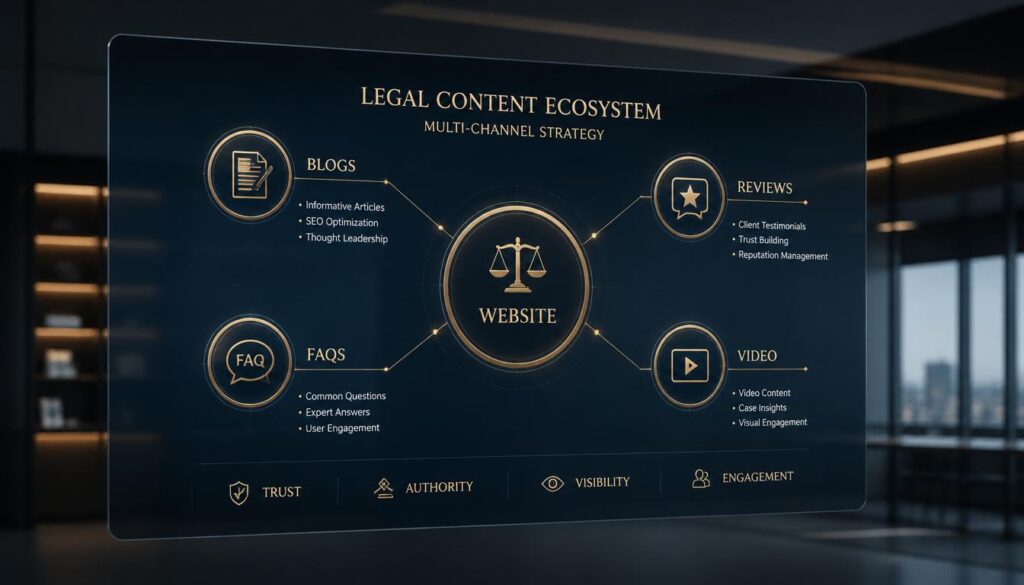
FAQ content is one of the most valuable additions to a law firm website.
People searching for legal help usually have many questions before hiring a lawyer. FAQ pages help answer those questions while improving SEO.
Examples of common legal FAQs include:
- • How much does a lawyer cost?
- • What should I do after a car accident?
- • How long does a divorce take?
- • What compensation can I recover?
- • Do I need a lawyer for my case?
- • What happens during a consultation?
FAQ content can:
- • Increase website traffic
- • Improve user engagement
- • Reduce confusion
- • Build trust
- • Support voice search optimization
- • Help pages appear in featured snippets
Law firms can create general FAQ pages or add FAQs to individual practice area pages.
Educational Blog Content
A blog is one of the most powerful content tools for law firms.
Consistent blogging helps law firms improve search engine rankings while educating potential clients.
Blog content allows attorneys to target informational keywords that potential clients search before hiring a lawyer.
Examples include:
- • What To Do After A Car Accident
- • How Long Does Probate Take?
- • What Happens During A DUI Arrest?
- • How Is Child Custody Determined?
- • What Is Comparative Negligence?
Educational blogs help law firms:
- • Build authority
- • Increase organic traffic
- • Answer common questions
- • Generate backlinks
- • Improve topical relevance
- • Support social media marketing
Short, easy-to-read articles often perform well because users prefer clear explanations over overly technical legal writing.
Firms should update blogs regularly to keep the website active and relevant.
Case Results and Success Stories
Many potential clients want proof that a law firm can achieve positive outcomes.
Case result pages can help build confidence by showing examples of previous successes.
These pages may include:
- • Settlement amounts
- • Verdicts
- • Case summaries
- • Types of legal issues handled
- • Challenges overcome
Law firms must follow ethical advertising rules when discussing case results. Pages should include disclaimers explaining that past results do not guarantee future outcomes.
Success stories can help visitors feel more comfortable contacting the firm.
Client Testimonials and Reviews
Online reputation plays a major role in legal marketing.
Client testimonials help build trust because people often rely on reviews before hiring a lawyer.
Law firm websites should feature:
- • Written testimonials
- • Google reviews
- • Video testimonials
- • Client success stories
Testimonials work well on:
- • Homepages
- • Practice area pages
- • Attorney bio pages
- • Landing pages
Video testimonials can be especially effective because they feel more authentic and personal.
Law firms should always obtain proper client permission before publishing reviews or testimonials.
Clear Contact Pages
Every law firm website needs a strong contact page.
Some law firms lose leads simply because visitors cannot quickly find contact information.
A contact page should include:
- • Phone numbers
- • Email addresses
- • Contact forms
- • Office locations
- • Interactive maps
- • Office hours
- • Emergency contact details if applicable
Contact forms should be simple and easy to complete.
Many law firms ask for too much information, which can discourage potential clients from submitting inquiries.
The contact page should also work properly on mobile devices.
Calls To Action Throughout The Website
Good content should encourage users to take action.
Calls to action help guide visitors toward contacting the law firm.
Examples include:
- • Schedule A Free Consultation
- • Call Today
- • Speak With An Attorney
- • Request A Case Review
- • Contact Our Legal Team
Calls to action should appear throughout the website, not just on the contact page.
Strong placement areas include:
- • Homepage banners
- • Practice area pages
- • Blog posts
- • Attorney bios
- • Sidebar sections
- • Website footer
Clear calls to action can improve conversion rates significantly.
About Us Pages
An About Us page helps explain the law firm’s story, mission, and values.
Many people hiring lawyers want to feel a connection with the legal team. The About page helps create that emotional connection.
A good About page may include:
- • Firm history
- • Mission statement
- • Core values
- • Team philosophy
- • Community involvement
- • Awards and recognitions
- • Client-focused approach
The page should explain what makes the law firm different from competitors.
Legal Resource Libraries
Some law firms benefit from building resource centers or legal libraries.
These sections organize educational content into one searchable area.
Resource libraries may include:
- • Legal guides
- • Checklists
- • Downloadable PDFs
- • Videos
- • FAQs
- • Articles
- • Infographics
Resource centers help establish authority and keep users engaged longer.
They also improve internal linking opportunities across the website.
Video Content
Video content has become increasingly important for law firm websites.
Many people prefer watching videos instead of reading large amounts of text.
Law firms can use videos to:
- • Introduce attorneys
- • Explain legal processes
- • Answer FAQs
- • Discuss case types
- • Share client testimonials
- • Explain consultation expectations
Video helps build trust because visitors can see and hear the attorneys directly.
Short videos often perform well on homepages, practice area pages, and social media.
Landing Pages For Marketing Campaigns
Law firms running paid advertising campaigns should create dedicated landing pages.
Landing pages are designed specifically to convert visitors into leads.
These pages often focus on one service or audience.
Examples include:
- • Car accident lawyer landing page
- • DUI defense landing page
- • Immigration consultation page
- • Wrongful death campaign page
Effective landing pages usually include:
- • Clear headlines
- • Strong calls to action
- • Testimonials
- • Contact forms
- • Benefits-focused content
- • Mobile-friendly design
Dedicated landing pages can improve advertising performance and lead generation.
Google Business Profile Integration
Local SEO content should connect with Google Business Profile optimization.
Law firm websites should include:
- • Embedded Google Maps
- • Consistent contact information
- • Local reviews
- • Directions to offices
- • Local legal content
Consistency between the website and Google Business Profile helps improve local rankings.
Law firms targeting competitive local markets should prioritize local SEO content.
Frequently Updated Content
Fresh content signals that a website is active.
Law firms should regularly update:
- • Blogs
- • News articles
- • Legal updates
- • FAQ sections
- • Attorney information
Google tends to favor websites that remain current and relevant.
Fresh content also gives firms more opportunities to target new keywords.
Case Evaluation Forms
Online case evaluation forms can help increase lead generation.
Potential clients often want quick ways to contact attorneys without making phone calls.
These forms should ask for basic information such as:
- • Name
- • Contact details
- • Type of case
- • Brief case description
The forms should be simple and easy to complete.
Long forms may reduce conversions.
Mobile-Friendly Content
Modern law firm websites must be optimized for mobile devices.
A large percentage of legal searches happen on smartphones.
Mobile-friendly content should include:
- • Short paragraphs
- • Clear headers
- • Fast loading pages
- • Click-to-call buttons
- • Responsive design
- • Easy navigation
Poor mobile experiences can cause visitors to leave quickly.
Google also considers mobile usability when ranking websites.
Trust Signals
Trust signals help reassure potential clients.
Law firms should include:
- • Awards
- • Certifications
- • Bar memberships
- • Media mentions
- • Professional associations
- • Client reviews
- • Case results
These elements can improve credibility and encourage users to contact the firm.
Trust signals should appear throughout the website rather than being hidden on one page.
Social Proof Content
Social proof shows that other people trust the law firm.
Examples include:
- • Review counts
- • Testimonials
- • Media coverage
- • Community involvement
- • Speaking engagements
- • Industry awards
Potential clients often compare multiple law firms before making decisions.
Strong social proof can help firms stand out.
Community Involvement Content
Community involvement helps humanize a law firm.
Many people prefer attorneys who actively support local communities.
Law firms can highlight:
- • Charity work
- • Sponsorships
- • Volunteer efforts
- • Scholarships
- • Community events
This type of content can strengthen local branding and public perception.
News And Legal Updates
Some law firms publish legal news and updates.
This content helps demonstrate knowledge of current laws and legal developments.
Examples include:
- • New state laws
- • Court rulings
- • Legal trends
- • Regulatory changes
Timely content can improve SEO while positioning attorneys as knowledgeable professionals.
Downloadable Guides And Lead Magnets
Downloadable resources can help law firms generate leads.
Examples include:
- • Accident checklists
- • Divorce planning guides
- • Estate planning worksheets
- • Business law compliance guides
Law firms may request visitor email addresses in exchange for downloads.
This can help firms build email marketing lists.
Internal Linking Content
Internal linking is an important part of website content strategy.
Every law firm website should connect related pages together.
For example:
- • Blog posts should link to practice area pages
- • Practice area pages should link to attorney bios
- • FAQ pages should link to contact pages
- • Location pages should connect to service pages
Internal linking improves:
- • User navigation
- • SEO performance
- • Website engagement
- • Crawlability
Well-structured content helps both users and search engines understand the site.
Search Engine Optimized Content
SEO should influence every type of content on a law firm website.
Search engine optimized content helps law firms rank higher in Google search results.
Important SEO elements include:
- • Keyword optimization
- • Title tags
- • Meta descriptions
- • Internal links
- • Header tags
- • Local keywords
- • Fast page speed
- • Structured content
However, law firms should avoid keyword stuffing.
Content should always sound natural and helpful.
Content Focused On User Intent
Good law firm content focuses on what users actually want.
Some people search for information, while others are ready to hire a lawyer immediately.
Websites should include content for different stages of the client journey.
Informational content includes:
- • FAQs
- • Blogs
- • Legal guides
Conversion-focused content includes:
- • Consultation pages
- • Contact forms
- • Attorney profiles
- • Testimonials
Understanding user intent can improve both SEO and conversions.
Accessibility Content Features
Law firm websites should be accessible to all users.
Accessibility improvements may include:
- • Readable fonts
- • Clear navigation
- • Alt text for images
- • Keyboard-friendly design
- • Proper color contrast
Accessible websites improve user experience and may reduce legal risks.
Privacy Policies And Disclaimers
Every law firm website should include proper legal notices.
Important pages include:
- • Privacy policies
- • Disclaimer pages
- • Terms of use
- • ADA statements if applicable
These pages help protect the firm while informing users about website policies.
Live Chat And Instant Communication Content
Many law firms now use live chat features.
Visitors often prefer instant communication instead of waiting for callbacks.
Live chat can help:
- • Increase conversions
- • Capture leads after business hours
- • Answer basic questions
- • Improve customer service
Chat features should be easy to access on both desktop and mobile devices.
Multilingual Content
Some law firms serve multilingual communities.
Offering content in multiple languages can help expand reach and improve accessibility.
Spanish-language legal content is especially valuable in many parts of the United States.
Multilingual websites can:
- • Increase trust
- • Improve communication
- • Expand market reach
- • Support local SEO
Translations should always be accurate and professionally written.
Content That Explains The Legal Process
Many potential clients feel overwhelmed by legal issues.
Content that explains the legal process can reduce fear and confusion.
Examples include:
- • What happens after filing a lawsuit
- • Steps in a divorce case
- • Timeline of a personal injury claim
- • Criminal court procedures
Simple educational content helps users feel more informed and confident.
Competitive Comparison Content
Some law firms create content explaining what separates them from competitors.
This may include:
- • Years of experience
- • Trial experience
- • Local knowledge
- • Personalized service
- • Availability
- • Client communication practices
Potential clients often compare several firms before making decisions.
Clear differentiation can improve conversion rates.