How Can SEO Help Insurance Agencies Increase Qualified Leads During Peak Season?
Insurance agencies often experience busy periods throughout the year. Open enrollment, storm seasons, tax season, new business registration periods, and year-end financial planning all create spikes in consumer demand for insurance products. During these peak seasons, agencies compete heavily for attention online. Potential customers search for policies, compare providers, read reviews, and request quotes at a much higher rate.
Search engine optimization (SEO) helps insurance agencies capture this increased demand. A strong SEO strategy can improve online visibility, attract highly targeted traffic, and generate qualified leads from people already searching for insurance solutions.
For insurance agencies, SEO is not simply about increasing website traffic. The real goal is attracting the right visitors who are more likely to become paying clients. During peak season, this becomes even more important because competition and advertising costs often rise significantly.
This article explains how SEO helps insurance agencies increase qualified leads during peak seasons and why long-term optimization can provide a competitive advantage.
Understanding Qualified Leads in the Insurance Industry
Not every website visitor becomes a valuable lead. Qualified leads are people who are actively looking for insurance products and are more likely to purchase coverage. These leads may already understand their needs, have a budget, and are searching for a provider they can trust.
Examples of qualified insurance leads include:
- • A homeowner searching for flood insurance before hurricane season
- • A small business owner comparing commercial liability policies
- • A family searching for health insurance during open enrollment
- • A driver looking for lower auto insurance rates after purchasing a new vehicle
- • A landlord seeking property insurance coverage for rental homes
SEO helps insurance agencies reach these users at the exact moment they are searching for answers online.
Why Peak Season Matters for Insurance Agencies
Peak seasons often create major revenue opportunities for insurance providers. During these periods, search volume increases dramatically for specific insurance products and services.
Examples include:
- • Health insurance during open enrollment
- • Home insurance during storm or wildfire season
- • Auto insurance during year-end vehicle sales
- • Life insurance during financial planning periods
- • Commercial insurance during business registration cycles
Consumers are more motivated to act during these times. Many people face deadlines, legal requirements, or immediate risks that push them to search for coverage quickly.
Insurance agencies that appear prominently in search results during these periods can generate a large number of high-intent leads.
SEO Helps Insurance Agencies Appear When Customers Are Searching
One of the biggest benefits of SEO is visibility. Most consumers begin their insurance research online using search engines.
They may search for terms like:
- • “Best auto insurance near me”
- • “Affordable health insurance plans”
- • “Commercial insurance for contractors”
- • “Flood insurance quotes”
- • “Independent insurance agency in Houston”
SEO helps agencies rank higher for these searches. When an agency appears on the first page of search results, it gains more visibility and credibility.
People often trust businesses that rank highly in organic search results because search engines prioritize relevant and authoritative content.
During peak seasons, appearing at the top of search results can significantly increase website traffic and lead generation.
Local SEO Drives High-Intent Insurance Leads
Many insurance searches have local intent. Consumers often want to work with nearby agents who understand local laws, risks, and market conditions.
Local SEO helps agencies appear in geographically targeted searches.
For example:
- • “Insurance agency in Dallas”
- • “Home insurance agent near me”
- • “Business insurance in Chicago”
- • “Medicare supplement plans in Phoenix”
A strong local SEO strategy includes:
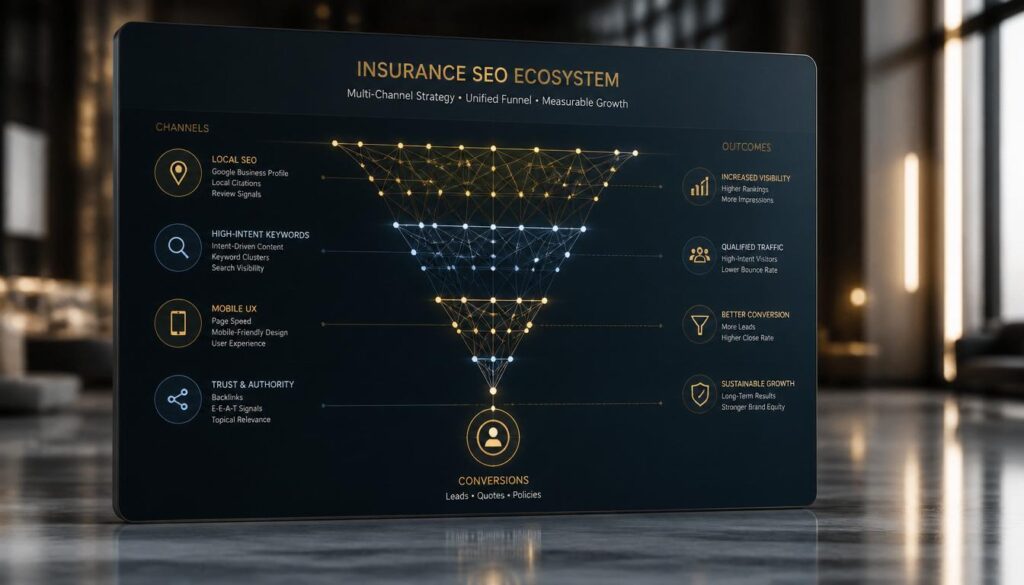
- • Optimizing Google Business Profiles
- • Building local citations
- • Encouraging customer reviews
- • Creating city-specific landing pages
- • Using localized keywords
- • Maintaining consistent business information online
During peak season, local SEO becomes especially valuable because consumers often need quick answers and immediate assistance.
An agency that appears in local map results can attract ready-to-buy customers searching nearby.
Seasonal Keyword Optimization Attracts Timely Traffic
Peak season SEO works best when agencies optimize content around seasonal search behavior.
Search trends change throughout the year. Insurance agencies that understand these trends can prepare content ahead of time.
For example:
- • Before hurricane season, homeowners search for flood and storm coverage
- • During open enrollment, consumers search for health insurance plans
- • During tax season, business owners research liability and commercial coverage
- • In winter, drivers may search for comprehensive auto insurance
By creating seasonal landing pages and blog content early, agencies can rank before search demand reaches its peak.
Examples of seasonal SEO content include:
- • “How to Prepare Your Home Insurance Before Hurricane Season”
- • “What to Know About Open Enrollment This Year”
- • “Best Commercial Insurance Policies for New Businesses”
- • “Winter Driving Risks and Auto Insurance Coverage”
Content Marketing Builds Trust With Potential Clients
Insurance is a trust-based industry. Consumers want to work with agencies that demonstrate expertise and reliability.
SEO content marketing helps agencies educate potential customers while improving search rankings.
Helpful content can answer common questions such as:
- • What type of insurance do I need?
- • How much coverage should I buy?
- • What factors affect insurance premiums?
- • What is covered under a specific policy?
- • How can I lower my insurance costs?
When agencies consistently publish informative content, they position themselves as trusted advisors rather than just sales organizations.
This trust becomes extremely important during peak season when consumers may feel overwhelmed by choices and deadlines.
Educational content can guide visitors through the decision-making process and encourage them to request quotes or consultations.
SEO Generates Long-Term Lead Flow
Unlike paid advertising, SEO can continue producing results long after content is published.
Paid ads stop generating traffic when budgets are exhausted. SEO content, however, can attract visitors for months or years.
This long-term visibility becomes valuable during recurring peak seasons.
For example, a well-optimized article about open enrollment may continue ranking year after year with periodic updates.
Over time, insurance agencies can build a large library of optimized content targeting different policies, industries, and customer concerns.
This creates multiple opportunities to generate qualified leads across different seasons.
Mobile SEO Helps Capture On-the-Go Searches
Many consumers search for insurance information using smartphones.
During emergencies or urgent situations, mobile searches often increase significantly.
Examples include:
- • Drivers searching for insurance after purchasing a vehicle
- • Homeowners seeking storm coverage during severe weather alerts
- • Business owners looking for liability insurance quickly
Mobile SEO ensures insurance websites load quickly, display properly, and provide a smooth user experience.
Important mobile optimization factors include:
- • Fast page speed
- • Responsive website design
- • Easy navigation
- • Click-to-call buttons
- • Simple contact forms
- • Clear calls to action
A poor mobile experience can cause potential leads to leave the site and contact a competitor instead.
Technical SEO Improves Website Performance
Technical SEO helps search engines properly crawl, index, and rank insurance websites.
Even high-quality content may struggle to rank if a site has technical problems.
Technical SEO improvements may include:
- • Improving website speed
- • Fixing broken links
- • Optimizing site architecture
- • Adding schema markup
- • Improving security with HTTPS
- • Reducing duplicate content
- • Optimizing metadata
During peak seasons, increased website traffic can strain poorly optimized websites.
Technical SEO helps ensure visitors can access pages quickly and easily even during high-demand periods.
SEO Helps Lower Cost Per Lead
Insurance advertising can become extremely expensive during competitive seasons.
Pay-per-click advertising costs often increase when more agencies compete for the same keywords.
SEO can reduce dependence on expensive advertising by generating organic traffic.
While SEO requires time and investment, it often delivers a lower long-term cost per lead compared to paid advertising alone.
Organic search traffic can continue generating leads without requiring payment for every click.
This makes SEO especially valuable for agencies looking to maximize marketing budgets during competitive periods.
High-Intent Keywords Bring Better Leads
SEO allows insurance agencies to target highly specific keywords that signal strong buying intent.
For example, someone searching “What is homeowners insurance?” may still be researching.
However, someone searching:
- • “Get homeowners insurance quote today”
- • “Best business liability insurance for restaurants”
- • “Affordable Medicare plans near me”
is much closer to making a purchasing decision.
By targeting transactional and commercial-intent keywords, agencies can attract visitors more likely to convert into customers.
These high-intent leads often produce better conversion rates and stronger return on investment.
SEO Supports Multiple Insurance Niches
Many insurance agencies offer multiple products and services.
SEO allows agencies to create dedicated pages for different niches and customer groups.
Examples include:
- • Auto insurance
- • Homeowners insurance
- • Renters insurance
- • Commercial insurance
- • Workers’ compensation
- • Cyber liability insurance
- • Health insurance
- • Life insurance
- • Umbrella policies
Each service page can target different keywords and search intent.
This helps agencies attract highly targeted traffic across multiple insurance categories during various seasonal trends.
Optimized Landing Pages Increase Conversion Rates
Getting traffic to a website is only part of the process. SEO landing pages must also convert visitors into leads.
High-performing insurance landing pages often include:
- • Clear headlines
- • Trust indicators
- • Customer testimonials
- • Strong calls to action
- • Quote request forms
- • Easy navigation
- • Fast loading times
- • Helpful information
Landing pages should focus on specific insurance products and customer needs.
For example, a flood insurance landing page during hurricane season should directly address flood risks, policy options, and quote requests.
Well-optimized landing pages help convert search traffic into qualified inquiries.
Online Reviews Strengthen SEO and Trust
Online reviews influence both search rankings and consumer trust.
Many consumers read reviews before contacting an insurance agency.
Positive reviews can:
- • Improve local SEO visibility
- • Increase credibility
- • Encourage inquiries
- • Differentiate agencies from competitors
Insurance agencies should encourage satisfied clients to leave reviews on platforms like Google.
Responding professionally to reviews also demonstrates customer service quality.
During peak season, strong reviews may persuade consumers to choose one agency over another.
SEO Helps Agencies Compete With Larger Brands
Large national insurance companies often dominate traditional advertising channels.
However, SEO gives smaller and independent agencies an opportunity to compete online.
Local SEO, niche content, and specialized expertise can help smaller agencies rank for valuable searches.
For example, an independent agency specializing in contractor insurance may outrank larger competitors for highly specific local searches.
By focusing on targeted keywords and customer needs, smaller agencies can attract highly qualified leads without matching massive advertising budgets.
Data and Analytics Improve SEO Performance
SEO provides measurable insights that help agencies improve marketing performance.
Analytics tools can track:
- • Website traffic
- • Keyword rankings
- • Conversion rates
- • User behavior
- • Bounce rates
- • Lead sources
- • Top-performing pages
These insights help agencies understand which strategies generate the most qualified leads.
For example, an agency may discover that certain blog posts or landing pages consistently generate quote requests during peak season.
This information can guide future content creation and marketing decisions.
Voice Search Optimization Expands Reach
Voice search continues to grow as consumers use smartphones and smart devices.
People often use conversational phrases when speaking into voice assistants.
Examples include:
- • “Who offers affordable car insurance near me?”
- • “What is the best homeowners insurance company nearby?”
- • “Where can I get flood insurance today?”
SEO strategies that include conversational keywords and question-based content can help agencies appear in voice search results.
Voice optimization can become especially useful during urgent seasonal situations where consumers need immediate answers.
FAQ Content Captures Search Traffic
Frequently asked questions are valuable for both SEO and lead generation.
Insurance consumers often search for answers before requesting quotes.
FAQ pages can target searches like:
- • “Does homeowners insurance cover flooding?”
- • “How much business insurance do I need?”
- • “What affects auto insurance premiums?”
- • “Can I change health insurance plans anytime?”
Well-structured FAQ content improves search visibility and helps build consumer confidence.
It can also reduce confusion and encourage visitors to contact the agency for personalized assistance.
SEO and Paid Advertising Work Together
SEO and paid advertising are often strongest when combined.
During peak seasons, agencies can use paid ads for immediate visibility while SEO supports long-term lead generation.
SEO content can also improve paid advertising performance by directing traffic to optimized