How Can Property Insurance Companies Recover From a Decline in Organic Search Traffic?
Organic search traffic is one of the most valuable lead sources for property insurance companies. When homeowners search online for policies, coverage options, claims information, or insurance advice, strong rankings in search engines can generate highly qualified traffic without relying heavily on paid advertising.
However, many home insurance and property insurance companies have experienced sudden drops in search visibility in recent years. Google algorithm updates, increased competition, AI-generated search summaries, outdated websites, and weak content strategies can all reduce rankings and lead generation.
A decline in organic search traffic can hurt policy sales, reduce quote requests, and weaken brand visibility. The good news is that recovery is possible with the right digital marketing strategy. Property insurance providers that focus on content quality, technical SEO, local optimization, and customer-focused experiences can rebuild search authority and generate sustainable growth.
Understand Why Organic Search Traffic Declined
The first step in recovery is identifying what caused the decline. Many property insurance companies assume traffic drops are random, but there is usually a clear reason behind the problem.
Common causes include:
- Google algorithm updates
- Thin or outdated website content
- Poor mobile usability
- Slow website speed
- Declining backlink quality
- Keyword cannibalization
- Technical SEO errors
- Increased competition from national insurance brands
- AI-generated search results reducing clicks
A complete SEO audit helps home insurance companies identify the exact issues affecting rankings. Reviewing analytics, keyword performance, crawl reports, and user engagement data provides insight into what changed and where improvements are needed.
Insurance companies should compare traffic trends against known Google updates and examine which pages lost visibility. Sometimes only specific sections of the website are affected, such as blog articles, quote pages, or local landing pages.
Improve Technical SEO Foundations
Technical SEO problems often contribute to ranking losses for property insurance websites. Search engines need to crawl, understand, and index website content efficiently.
Important technical SEO improvements include:
Increase Website Speed
Page speed affects both rankings and user experience. Homeowners searching for property insurance quotes expect fast-loading pages. Slow websites often experience higher bounce rates and lower conversions.
Property insurance companies can improve speed by:
- Compressing images
- Reducing unnecessary scripts
- Using modern caching systems
- Improving hosting performance
- Minimizing large design elements
Fast-loading websites also improve mobile usability, which is essential because many insurance searches happen on smartphones.
Fix Broken Pages and Redirect Issues
Broken links, outdated redirects, and missing pages can damage SEO performance. Insurance websites that have been redesigned multiple times often accumulate technical problems over the years.
An SEO audit should identify:
- 404 errors
- Redirect chains
- Duplicate pages
- Indexing problems
- Missing metadata
- Broken internal links
Fixing these issues helps search engines properly evaluate the website.
Optimize Mobile Experience
Google primarily uses mobile-first indexing. If a property insurance website performs poorly on mobile devices, rankings can decline significantly.
Mobile optimization should focus on:
- Easy navigation
- Fast-loading pages
- Readable text
- Simple quote forms
- Clear calls to action
A mobile-friendly experience helps improve both rankings and lead generation.
Refresh Outdated Property Insurance Content
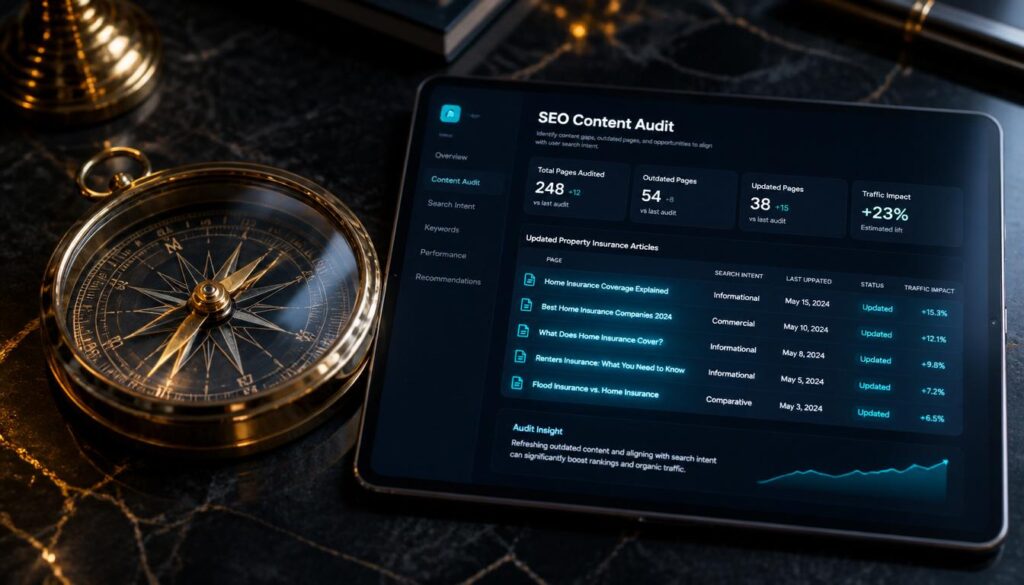
One of the biggest reasons for declining organic search traffic is outdated content. Insurance information changes regularly due to market conditions, regulations, coverage trends, and homeowner concerns.
Older articles that once ranked well may gradually lose visibility if they are not updated.
Property insurance companies should refresh content related to:
- Home insurance coverage
- Property damage claims
- Flood insurance
- Storm protection
- Liability coverage
- Policy comparisons
- Deductibles
- Insurance costs
- Homeowner risk management
Updating articles with current information, statistics, examples, and improved formatting can restore rankings and increase engagement.
Search engines favor fresh, authoritative content that accurately answers user questions.
Focus on Search Intent Instead of Only Keywords
Many home insurance companies still create content focused only on keywords instead of user intent. Modern SEO requires understanding what homeowners actually want when they search online.
For example, someone searching for “best property insurance coverage for hurricanes” likely wants practical guidance and policy information rather than a generic sales page.
Property insurance companies should create content that addresses:
- Common homeowner concerns
- Claims processes
- Coverage comparisons
- Cost-saving strategies
- Natural disaster preparation
- First-time homeowner insurance questions
Content that genuinely helps users tends to perform better in search results and build trust with potential policyholders.
Build Stronger Local SEO Visibility
Local SEO is extremely important for home insurance and property insurance providers. Many homeowners prefer working with insurance companies that understand local risks, weather conditions, and property values.
Local SEO improvements can help recover lost organic traffic by targeting nearby customers.
Optimize Local Landing Pages
Property insurance companies should create high-quality landing pages for cities, counties, and service areas.
Each page should include:
- Local insurance concerns
- Weather-related risks
- Coverage recommendations
- Community-specific information
- Unique localized content
Avoid creating thin duplicate pages that only swap city names.
Improve Google Business Profile Optimization
An optimized Google Business Profile can improve local search visibility and generate leads.
Insurance companies should:
- Update business information regularly
- Add service descriptions
- Upload photos
- Collect customer reviews
- Respond to reviews professionally
Positive reviews also help build trust with homeowners searching for insurance providers.
Create Localized Content
Localized blog content can improve rankings for regional searches.
Examples include:
- “How Hurricane Season Affects Home Insurance Rates”
- “Common Property Insurance Claims in Texas”
- “What Florida Homeowners Should Know About Flood Insurance”
This type of content attracts highly targeted traffic while demonstrating local expertise.
Strengthen Content Authority and Expertise
Google increasingly rewards websites that demonstrate expertise, authority, and trustworthiness. This is especially important in industries like home insurance where consumers rely on accurate financial information.
Property insurance companies should position themselves as trusted educational resources rather than simply focusing on sales.
Ways to improve authority include:
- Publishing expert-written articles
- Adding author bios
- Including professional credentials
- Using credible sources
- Creating detailed educational guides
- Publishing original insights
Long-form content often performs well because it thoroughly answers user questions and increases time on site.
Create Content Clusters Around Insurance Topics
Content clusters help search engines understand the depth of a website’s expertise.
Instead of publishing random articles, home insurance companies should organize content into topic groups.
For example, a property insurance cluster may include:
- Home insurance basics
- Coverage types
- Deductible explanations
- Claims processes
- Water damage coverage
- Fire damage claims
- Roof replacement insurance
- Natural disaster protection
Internal links between related articles strengthen SEO signals and improve user navigation.
This approach can help recover rankings for competitive insurance keywords.

Improve Internal Linking Structure
Internal linking is often overlooked during SEO recovery efforts.
A strong internal linking strategy helps:
- Distribute authority across pages
- Improve crawling efficiency
- Increase user engagement
- Guide visitors toward quote pages
Property insurance companies should link related articles naturally throughout the website.
For example, a blog about storm damage claims could link to pages about:
- Homeowner coverage
- Wind damage policies
- Flood insurance options
- Claims assistance services
Strategic internal links help search engines better understand content relationships.
Earn Higher Quality Backlinks
Backlinks remain one of the strongest ranking factors in SEO.
If a property insurance company loses valuable backlinks or competitors gain stronger links, rankings may decline.
Insurance companies should focus on earning authoritative backlinks through:
- Industry partnerships
- Educational resources
- Guest articles
- Local sponsorships
- Data studies
- Community involvement
- Press coverage
Low-quality link building tactics should be avoided because they can create long-term SEO problems.
The best backlinks usually come from trusted websites that naturally reference useful content.
Optimize for AI Search Results and Google AI Overviews
AI-generated search summaries are changing how users interact with search engines. Property insurance companies must adapt content strategies to remain visible.
Content optimized for AI search experiences should:
- Directly answer common questions
- Use clear formatting
- Include concise summaries
- Feature structured headings
- Provide authoritative explanations
FAQ sections are especially helpful for capturing visibility in AI-generated results.
Examples include:
- What does home insurance cover?
- How much property insurance do homeowners need?
- Does home insurance cover flooding?
- How are property insurance rates calculated?
Structured, easy-to-read content increases the chances of appearing in AI summaries and featured search results.
Improve User Engagement Signals
User engagement metrics can influence search visibility over time.
If visitors quickly leave a website because content is weak or confusing, rankings may decline.
Property insurance websites should improve engagement by:
- Writing clearer content
- Using readable formatting
- Adding visual elements
- Improving navigation
- Simplifying quote forms
- Including strong calls to action
Helpful content encourages users to stay longer, explore additional pages, and interact with the brand.
Use Data to Identify Recovery Opportunities
SEO recovery should be data-driven rather than based on assumptions.
Property insurance companies should regularly monitor:
- Organic traffic trends
- Keyword rankings
- Conversion rates
- Bounce rates
- Indexed pages
- Top-performing content
- Declining pages
Analytics tools help identify which pages need improvement and which topics still perform well.
Companies can often recover traffic faster by updating historically successful content rather than creating entirely new pages.
Expand Long-Tail Keyword Targeting
Competitive keywords like “home insurance” are difficult to rank for, especially against national carriers.
Long-tail keywords can provide better opportunities for traffic recovery.
Examples include:
- affordable home insurance for first-time buyers
- property insurance for coastal homes
- home insurance coverage for water damage
- insurance for older homes
- best property insurance for high-value homes
Long-tail searches often have stronger buying intent and lower competition.
Property insurance companies that consistently target niche homeowner concerns can build sustainable search visibility over time.

Improve Conversion Paths Alongside SEO
Recovering organic traffic is important, but converting visitors into leads matters just as much.
Insurance websites should guide users naturally toward:
- Quote requests
- Consultation forms
- Coverage comparisons
- Phone calls
- Claims support
Simple conversion improvements include:
- Clear buttons
- Faster forms
- Trust signals
- Testimonials
- Coverage calculators
- Educational resources
Higher conversion rates help maximize the value of recovered traffic.
Develop Consistent Content Publishing
Many home insurance companies publish content inconsistently. Long gaps between updates can weaken search visibility.
Consistent publishing helps:
- Increase indexed pages
- Build authority
- Target new keywords
- Improve crawl frequency
- Expand audience reach
A long-term content calendar should include:
- Educational blogs
- FAQ articles
- Local insurance guides
- Seasonal homeowner tips
- Disaster preparedness content
- Claims advice
Consistency is critical for long-term organic growth.
Monitor Competitor SEO Strategies
Property insurance companies should closely monitor competitors that gained visibility during their traffic decline.
Competitor analysis can reveal:
- Stronger keyword targeting
- Better content formats
- Improved user experiences
- Higher-quality backlinks
- Local SEO strategies
Understanding competitor strengths helps insurance companies identify opportunities for improvement.
However, recovery strategies should focus on creating genuinely better user experiences rather than copying competitors directly.
Invest in High-Quality Educational Resources
Educational resources are extremely valuable for SEO and lead generation in the property insurance industry.
Helpful resources may include:
- Homeowner insurance checklists
- Disaster preparation guides
- Claims documentation tips
- Property risk assessments
- Insurance terminology guides
These resources attract backlinks, improve engagement, and position insurance companies as trusted experts.
Consumers are more likely to request quotes from companies they perceive as knowledgeable and transparent.
Use Video Content to Support SEO
Video content can improve engagement and search visibility when properly optimized.
Property insurance companies can create videos covering:
- Home insurance basics
- Filing claims
- Coverage explanations
- Storm preparedness
- Property inspections
Videos increase time on site and can appear in search results independently.
Embedding videos within blog articles also improves user experience.
Avoid Panic Changes During Recovery
One of the biggest mistakes insurance companies make after traffic declines is changing everything at once.
Massive redesigns, deleting content, or aggressively targeting new keywords can worsen the situation.
Successful recovery strategies are usually gradual and data-driven.
Property insurance companies should:
- Prioritize technical fixes first
- Improve high-value pages
- Refresh outdated content
- Expand topical authority steadily
- Track performance carefully
SEO recovery often takes several months, especially in competitive industries like home insurance.
Build Long-Term Search Authority
The most successful property insurance brands focus on long-term authority rather than quick SEO wins.
Search engines increasingly reward companies that consistently provide valuable information and trustworthy experiences.
Long-term authority comes from:
- Helpful content
- Strong technical performance
- Consistent publishing
- Positive user experiences
- Local relevance
- Brand trust
Property insurance companies that invest in sustainable SEO strategies are better positioned to recover from traffic declines and maintain visibility in future algorithm updates.