
How Can a New Home Insurance Company Compete Against National Insurance Brands Online?
Large national insurance companies dominate television commercials, search engine results, and social media feeds. Their massive advertising budgets make it difficult for a new home insurance company to stand out online. However, digital marketing has created opportunities for smaller insurance providers to compete effectively without spending millions on advertising.
Today’s consumers do not automatically trust the biggest insurance brand. Many homeowners want personalized service, faster communication, local expertise, and transparent pricing. A new insurance company that understands how to use digital marketing strategically can attract qualified leads, build trust, and grow its customer base online.
The key is focusing on long-term digital marketing strategies that increase visibility, authority, and engagement over time. Instead of relying on expensive pay-per-click advertising, new home insurance companies can compete by investing in search engine optimization, content marketing, local SEO, social media engagement, online reputation management, email marketing, and strategic partnerships.
Build a Strong SEO Foundation
Search engine optimization is one of the most important digital marketing strategies for a new home insurance company. SEO helps a company appear in organic search results when potential customers search for home insurance information or providers online.
Most homeowners begin their insurance research on search engines. They may search for phrases like:
- “best home insurance company near me”
- “affordable homeowners insurance”
- “home insurance for first-time buyers”
- “how much home insurance do I need”
A new insurance company can compete with larger brands by targeting specific keywords that match user intent. Instead of trying to rank immediately for highly competitive terms such as “home insurance,” smaller companies should focus on long-tail keywords.
Examples include:
- “home insurance for coastal homes in Florida”
- “homeowners insurance for older houses”
- “affordable home insurance in Texas”
- “insurance for first-time homeowners”
These keywords often have lower competition and attract more qualified leads.
SEO success also depends on website structure and technical performance. A modern insurance website should load quickly, work well on mobile devices, and provide a smooth user experience. Google prioritizes websites that offer fast loading speeds, secure browsing, and easy navigation.
Important SEO elements include:
- Optimized title tags
- Clear meta descriptions
- Proper heading structure
- Internal linking
- Fast page speed
- Mobile responsiveness
- High-quality written content
Consistent SEO efforts can gradually improve search rankings and increase organic website traffic without the ongoing costs of paid advertising.
Create Helpful Educational Content
Content marketing is one of the best ways for a new insurance company to establish authority online. Many homeowners have questions about insurance coverage, deductibles, claims, natural disaster protection, and policy limits. Educational content helps answer these questions while building trust with potential customers.
Instead of aggressively selling insurance policies, companies should focus on solving problems and educating consumers.
Useful blog topics may include:
- What does homeowners insurance cover?
- How much home insurance do you need?
- Common mistakes homeowners make when choosing insurance
- Understanding flood insurance exclusions
- Tips for lowering homeowners insurance costs
- What to do after storm damage
Helpful content builds credibility because consumers begin to view the company as a reliable source of information.
Long-form articles often perform especially well in search engines because they provide detailed answers to user questions. A company that regularly publishes useful content can improve search visibility while also nurturing customer trust.
Video content can also be highly effective. Many homeowners prefer watching short videos that explain insurance concepts in simple terms. A new insurance company can create videos discussing:
- Claims processes
- Home safety tips
- Disaster preparedness
- Insurance myths
- Coverage explanations
Video content can be shared across websites, social media platforms, and email campaigns to increase engagement.

Focus on Local SEO
Local SEO gives smaller insurance companies a major advantage against national competitors. While large insurance brands target broad national audiences, local insurance companies can focus on specific geographic areas and build strong local visibility.
Homeowners frequently search for insurance providers near their location. Optimizing for local search results helps companies appear when users search for services in their city or region.
A complete Google Business Profile is essential for local SEO success. The profile should include:
- Accurate business name
- Address
- Phone number
- Website
- Business hours
- Customer reviews
- Photos
- Service descriptions
Companies should also create location-specific pages on their websites. For example, a company serving multiple cities can create pages such as:
- Home Insurance in Dallas
- Homeowners Insurance in Tampa
- Home Insurance Services in Phoenix
These pages help improve rankings for local search queries.
Local SEO also benefits from directory listings and citations. Consistent business information across online directories helps strengthen credibility with search engines.
Additionally, publishing content related to local weather risks, regional housing concerns, and state insurance regulations can help attract geographically targeted traffic.
Build Trust Through Online Reviews
Trust is critical in the insurance industry. Consumers want reassurance that an insurance company will support them when they need help after property damage or financial loss.
Online reviews strongly influence purchasing decisions. Many homeowners read reviews before requesting insurance quotes or contacting a provider.
A new insurance company should actively encourage satisfied customers to leave reviews on platforms such as:
- Yelp
- Better Business Bureau
Positive reviews improve credibility and local search rankings.
Companies should also respond professionally to both positive and negative reviews. Thoughtful responses demonstrate strong customer service and accountability.
Testimonials can also be displayed throughout the company website. Real customer stories help humanize the brand and make potential customers feel more comfortable.
Case studies are another effective trust-building tool. For example, a company can explain how it helped a homeowner recover after storm damage or navigate a complicated claim.
Authentic customer experiences often resonate more strongly than traditional advertising messages.
Develop a Strong Social Media Presence
Social media gives new insurance companies the opportunity to build brand awareness and engage directly with consumers.
Instead of using social media purely for promotions, companies should focus on providing value and encouraging interaction.
Useful social media content may include:
- Home maintenance tips
- Storm preparedness checklists
- Seasonal safety reminders
- Insurance education
- Customer success stories
- Community involvement updates
Consistency is important. Posting regularly helps maintain visibility and encourages audience engagement.
Short educational videos tend to perform well on platforms such as Facebook, Instagram, and TikTok. Topics such as “5 things homeowners insurance usually does not cover” or “how to document property damage after a storm” can generate strong engagement.
Social media also allows smaller insurance companies to showcase personality and community involvement. National brands often appear corporate and impersonal, while smaller companies can present a more approachable image.
Responding quickly to comments and messages can further improve customer trust and engagement.
Use Email Marketing to Nurture Leads
Email marketing remains one of the most effective digital marketing tools for insurance companies. Many homeowners research insurance options for weeks or months before making a decision.
Email campaigns help companies stay connected with potential customers during this decision-making process.
A company can collect email addresses through:
- Quote request forms
- Downloadable guides
- Newsletter subscriptions
- Website contact forms
Once leads enter the email list, companies can send helpful and informative content rather than aggressive sales pitches.
Examples of useful email content include:
- Home safety tips
- Seasonal maintenance reminders
- Insurance coverage explanations
- Disaster preparedness guides
- Policy renewal reminders
Automated email sequences can also help nurture leads over time. For example, a homeowner who downloads a guide about hurricane insurance may receive follow-up emails discussing storm coverage and property protection tips.
Personalized email campaigns often produce higher engagement rates. Segmenting audiences based on location, homeownership stage, or insurance interests can improve relevance and conversions.
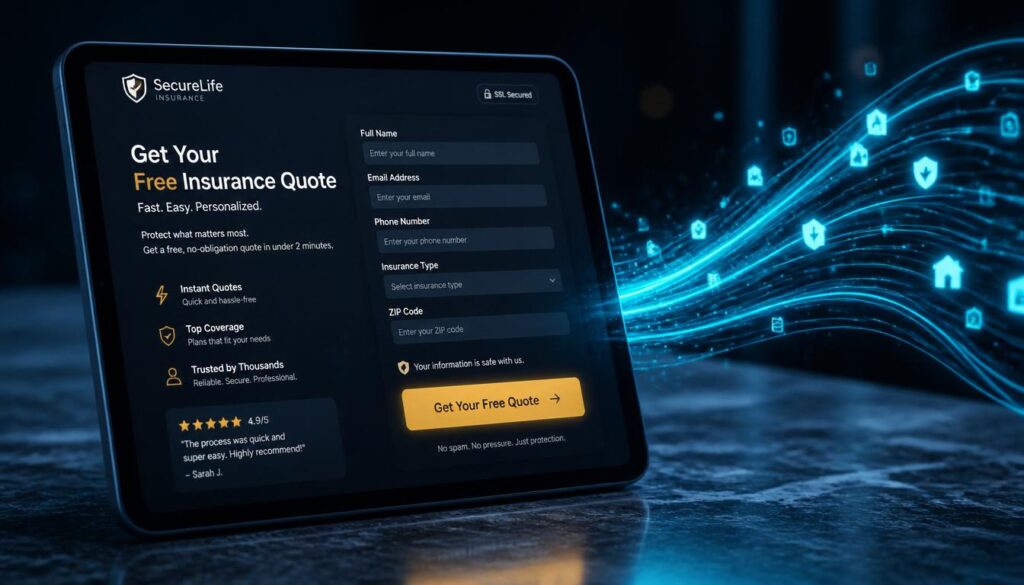
Invest in Website User Experience
A professional website is essential for competing online. Many consumers judge an insurance company’s credibility based on website quality.
A poorly designed website may discourage users from requesting quotes or contacting the business.
An effective insurance website should include:
- Clear navigation
- Fast loading speed
- Mobile optimization
- Easy-to-find contact information
- Simple quote request forms
- Educational resources
- Trust signals and testimonials
The quote request process should be straightforward and user-friendly. Long or confusing forms may reduce conversions.
Companies should also include strong calls to action throughout the site, such as:
- Request a Quote
- Speak With an Agent
- Compare Coverage Options
- Schedule a Consultation
Live chat tools can further improve user experience by providing immediate answers to visitor questions.
Accessibility is another important consideration. Websites should be designed so users of all abilities can easily navigate and understand the content.
Leverage Strategic Partnerships
Partnership marketing can help new insurance companies expand online visibility and credibility.
Real estate agents, mortgage brokers, home inspectors, contractors, and property management companies often interact with homeowners who need insurance services.
Building relationships with these professionals can generate referral opportunities and collaborative content marketing campaigns.
Examples include:
- Guest blog posts
- Joint webinars
- Social media collaborations
- Co-branded educational guides
A home insurance company might partner with a real estate agency to create a guide for first-time homebuyers. This type of collaboration benefits both businesses while reaching a highly targeted audience.
Partnerships can also improve backlink opportunities, which support SEO performance.
Use Video Marketing to Increase Engagement
Video marketing has become one of the most powerful digital marketing strategies. Many consumers prefer video content because it is easier to understand and more engaging than text alone.
Insurance topics can sometimes feel confusing or intimidating. Video helps simplify complex concepts and improve customer understanding.
Effective video ideas include:
- Explaining insurance coverage
- Walking through the claims process
- Home safety tutorials
- Frequently asked questions
- Customer testimonials
- Team introductions
Videos also help humanize the company. Seeing real employees and agents can make a smaller insurance company appear more trustworthy and approachable.
Insurance companies can upload videos to:
- YouTube
- TikTok
Embedding videos on website pages may also improve user engagement and increase time spent on the site.
Create a Strong Brand Identity
Branding matters in the insurance industry because consumers want reliability and consistency.
A new insurance company must clearly communicate what makes it different from national competitors.
Potential differentiators may include:
- Personalized customer service
- Local expertise
- Faster claims response
- Specialized coverage options
- Transparent pricing
- Community involvement
The company’s messaging should remain consistent across:
- Website content
- Social media
- Email campaigns
- Blogs
- Visual design
Strong branding helps consumers remember the business and builds familiarity over time.
Professional logos, consistent colors, and a recognizable tone of voice contribute to brand recognition and trust.

Publish Authority-Building Resources
Offering free resources can help generate leads and build authority online.
Examples include:
- Home insurance checklists
- Disaster preparedness guides
- Home inventory templates
- First-time homeowner guides
- Storm protection resources
These resources provide value while encouraging users to share contact information.
Interactive tools can also improve engagement. For example, a company may offer:
- Coverage calculators
- Risk assessment tools
- Home insurance comparison charts
Helpful tools position the company as an expert resource rather than simply a service provider.
Monitor Analytics and Improve Performance
Digital marketing success depends on ongoing measurement and improvement.
Insurance companies should regularly track metrics such as:
- Website traffic
- Search rankings
- Conversion rates
- Email open rates
- Social media engagement
- Lead generation performance
Analytics tools help identify which strategies are working and where adjustments are needed.
For example, if certain blog topics generate high traffic and conversions, the company can create additional related content.
A data-driven marketing approach allows smaller insurance companies to compete efficiently and maximize return on investment.