How Can Auto Insurance Companies Optimize Landing Pages For Maximum Conversion Of Drivers Seeking Same Day Coverage?
Drivers searching for same day auto insurance coverage are often ready to make a fast decision. Many of them need proof of insurance immediately because they purchased a vehicle, their previous policy expired, they were involved in an accident, or they need coverage before driving legally. Because of this urgency, auto insurance companies must design landing pages that remove friction, build trust quickly, and guide users toward completing a quote request or policy purchase.
A high-converting landing page is not simply about attractive design. It combines speed, trust signals, persuasive messaging, mobile optimization, local SEO, and streamlined conversion paths. Auto insurance companies that invest in conversion-focused landing pages can reduce acquisition costs while increasing policy sales from organic traffic, social campaigns, email marketing, and digital advertising.
Understanding the Intent of Drivers Seeking Same Day Coverage
Drivers searching for same day car insurance have high commercial intent. Their searches often include phrases such as:
- same day auto insurance
- instant car insurance quote
- buy car insurance today
- immediate SR-22 insurance
- affordable same day insurance
- instant proof of insurance
- same day liability coverage
- urgent auto insurance policy
These users are not casually researching. Most are looking for a quick solution and want to complete the process as efficiently as possible.
Because of this, successful auto insurance landing pages focus on speed, clarity, and reassurance. Every section of the page should answer one question: “How quickly can this driver get covered?”
Creating a Clear and Immediate Headline
The headline is one of the most important conversion elements on an auto insurance landing page. Drivers should immediately understand that the company can provide fast coverage.
Effective headlines usually focus on:
- same day protection
- instant quotes
- fast approvals
- affordable pricing
- immediate ID cards
Examples include:
- Get Same Day Auto Insurance Coverage in Minutes
- Instant Car Insurance Quotes With Immediate Proof of Coverage
- Affordable Auto Insurance for Drivers Who Need Coverage Today
The best landing pages avoid vague marketing language. Instead, they clearly communicate the benefit and urgency.
Subheadings should reinforce convenience and simplicity. For example:
“Compare rates, choose coverage, and download your proof of insurance today.”
This combination of clarity and urgency helps reduce bounce rates and increases user engagement.
Simplifying Quote Forms for Faster Conversions
One of the biggest mistakes auto insurance companies make is requiring too much information too early in the process.
Drivers seeking immediate coverage often abandon lengthy forms. High-performing insurance landing pages reduce friction by limiting the number of required fields in the first step.
Many successful auto insurance companies only ask for:
- ZIP code
- vehicle information
- driver age
- coverage type
Additional information can be collected later during the quote process.
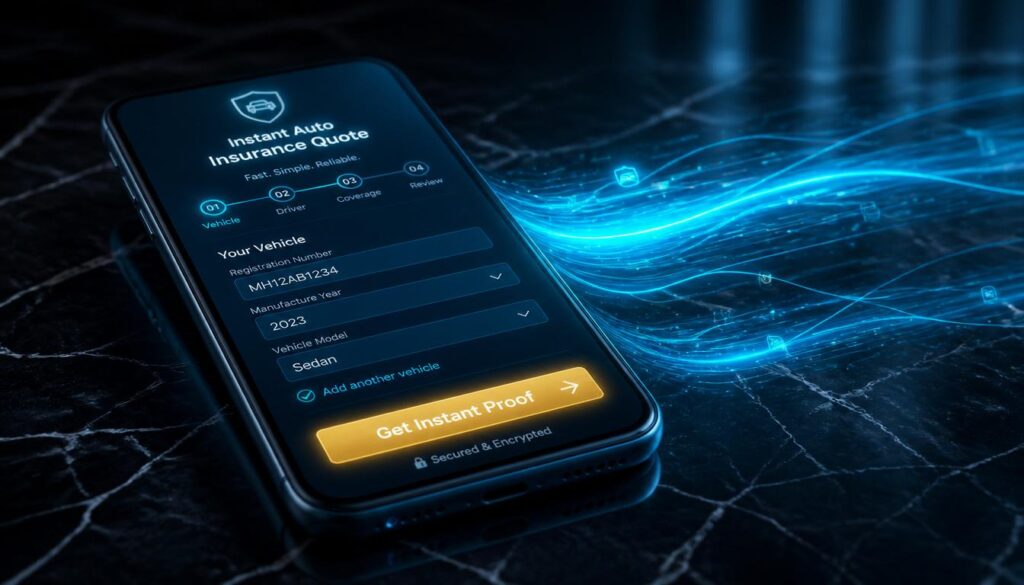
Multi-step forms often outperform long single-page forms because they feel less overwhelming. Progress bars also help improve completion rates by showing drivers how close they are to finishing.
For example:
Step 1: Vehicle Information
Step 2: Driver Details
Step 3: Coverage Options
Step 4: Final Quote
This structure creates momentum and reduces form abandonment.
Optimizing Landing Pages for Mobile Users
A large percentage of same day insurance searches come from mobile devices. Drivers may be shopping while at a dealership, DMV office, repair shop, or even roadside after an accident.
Because of this, mobile optimization is critical for auto insurance conversion rates.
Top-performing insurance landing pages include:
- fast mobile loading speeds
- click-to-call buttons
- large form fields
- simplified navigation
- sticky CTA buttons
- thumb-friendly design
Mobile users expect speed. Pages that load slowly often lose potential customers before they even read the offer.
Auto insurance companies frequently improve mobile performance by:
- compressing images
- reducing unnecessary scripts
- using lightweight page builders
- enabling browser caching
- minimizing pop-ups
Google also rewards faster mobile experiences with better search visibility, which helps generate more organic traffic for insurance companies.
Using Trust Signals to Reduce Buyer Anxiety
Purchasing auto insurance online requires trust. Drivers are entering personal information and making financial decisions, often under stressful conditions.
Strong trust signals help reassure users and increase conversions.
Common trust elements include:
- customer reviews
- insurance ratings
- testimonials
- security badges
- licensing information
- years in business
- partner logos
- Better Business Bureau ratings
Reviews are especially important for same day auto insurance because users want confirmation that the process is fast and reliable.
Testimonials that mention speed can be extremely effective, such as:
“I got insured in less than 15 minutes and downloaded my insurance card immediately.”
Adding real customer experiences helps remove uncertainty from the purchase process.
Highlighting Immediate Benefits Throughout the Page
Drivers looking for urgent coverage care about practical outcomes. Landing pages should repeatedly emphasize benefits that solve immediate problems.
Important benefits include:
- instant proof of insurance
- same day activation
- flexible payment options
- low down payments
- affordable liability coverage
- SR-22 filing support
- quick online approvals
These benefits should appear throughout the page, not just in one section.
For example, CTA buttons can reinforce urgency:
- Get Covered Today
- Start Your Instant Quote
- Receive Immediate Insurance Proof
- Compare Same Day Rates
This consistency helps reinforce the primary value proposition.
Improving Local SEO for High-Intent Searches
Many drivers search for local insurance solutions using terms like:
- same day auto insurance near me
- instant insurance in Dallas
- affordable car insurance in Houston
- same day SR-22 coverage in Chicago
Auto insurance companies optimize landing pages for local SEO to capture these high-conversion searches.
Effective local SEO strategies include:
- city-specific landing pages
- local keywords
- localized testimonials
- regional insurance requirements
- embedded maps
- locally relevant FAQs
For example, a landing page targeting Texas drivers may discuss minimum liability requirements in Texas and explain how quickly drivers can meet legal coverage standards.
Localized content improves both organic rankings and conversion rates because users feel the page is relevant to their situation.
Using Strong Calls-To-Action
The CTA is one of the most important elements on any insurance landing page.
Weak CTAs often reduce conversion rates because they fail to create urgency or clarity.
High-converting auto insurance CTAs focus on action and immediate benefits.
Examples include:
- Get Your Quote Now
- Buy Auto Insurance Today
- Compare Rates in Minutes
- Start Same Day Coverage
- Download Proof of Insurance Instantly
CTA buttons should stand out visually and appear multiple times throughout the page.
Many insurance companies place CTAs:
- above the fold
- after benefit sections
- below testimonials
- at the end of FAQs
- in sticky headers on mobile devices
Repeated CTA placement ensures users always have a clear next step.
Adding Live Chat and Instant Support
Drivers shopping for same day coverage often have urgent questions.
They may ask:
- How quickly does coverage start?
- Can I get insured without a down payment?
- Will this satisfy DMV requirements?
- Can I insure a newly purchased vehicle today?
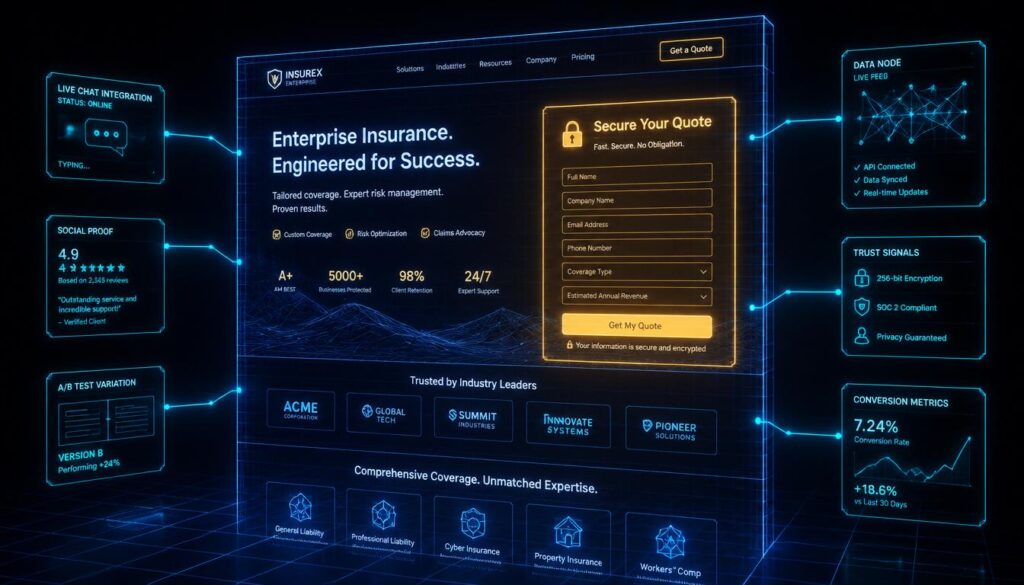
Live chat helps answer these questions immediately and prevents users from leaving the page.
Modern auto insurance companies often use:
- AI chatbots
- live agents
- click-to-call systems
- SMS support
- quote assistance tools
Instant support increases trust while reducing hesitation during the buying process.
Many insurance companies also use proactive chat prompts triggered by user behavior, such as:
“Need proof of insurance today? We can help.”
This creates engagement at critical decision points.
Using Social Proof and Customer Testimonials
Social proof is highly effective in the insurance industry because drivers want reassurance from other customers.
Landing pages that include detailed testimonials often convert better than pages with generic marketing copy.
The best testimonials focus on:
- speed
- affordability
- convenience
- customer service
- ease of signup
Video testimonials can be even more effective because they feel authentic and trustworthy.
Insurance companies also use:
- Google reviews
- Trustpilot ratings
- star review systems
- customer success stories
Showing a large number of positive reviews builds credibility quickly.
Reducing Page Distractions
Many insurance landing pages fail because they include too many competing elements.
Conversion-focused landing pages simplify the experience by reducing unnecessary distractions such as:
- excessive navigation menus
- unrelated links
- cluttered layouts
- too many offers
- irrelevant graphics
The goal is to keep users focused on one action: requesting a quote or purchasing coverage.
Minimalist layouts often perform better because they guide attention directly toward the CTA.
White space, clean typography, and organized sections also improve readability and user engagement.
Using Data and A/B Testing to Improve Performance
Successful auto insurance companies continuously test landing page performance.
A/B testing allows marketers to compare variations of:
- headlines
- CTA buttons
- images
- form lengths
- testimonials
- page layouts
- pricing displays
Even small changes can significantly improve conversion rates.
For example:
- changing “Get Started” to “Get Same Day Coverage”
- shortening forms from 12 fields to 5
- replacing stock images with real customer photos
These adjustments can increase quote requests and policy purchases substantially.
Insurance marketers also monitor:
- bounce rates
- heatmaps
- click-through rates
- form abandonment
- mobile engagement
- session duration
Analytics help identify friction points and optimize the customer journey.
Personalizing the User Experience
Personalization has become a major conversion strategy for modern insurance websites.
Drivers respond better to content tailored to their specific needs.
Landing pages may personalize based on:
- location
- vehicle type
- driving history
- age group
- insurance needs
- traffic source
For example:
A visitor arriving from a search for “same day SR-22 insurance” may see specialized messaging related to SR-22 filings and reinstatement requirements.
A user searching for “cheap liability insurance” may see messaging focused on affordability and minimum coverage options.
This targeted experience improves relevance and increases conversion likelihood.

Speed Optimization Matters More Than Ever
Website speed directly impacts both SEO rankings and conversions.
Drivers seeking same day coverage often abandon slow pages immediately.
Auto insurance companies improve page speed by:
- reducing large image sizes
- limiting third-party scripts
- using content delivery networks
- optimizing server performance
- implementing lazy loading
Fast-loading landing pages improve:
- user satisfaction
- mobile performance
- Google rankings
- lead generation
- quote completion rates
Page speed optimization is one of the highest ROI improvements for insurance websites.
Using Educational Content to Build Trust
Drivers often have questions about insurance requirements, pricing, and coverage types.
Landing pages that include educational content can improve trust and conversion rates.
Helpful content may include:
- FAQs
- state insurance requirements
- explanations of liability coverage
- SR-22 guidance
- deductible explanations
- claims process information
Educational content reduces confusion while positioning the insurance company as helpful and knowledgeable.
However, the content should remain concise and conversion-focused. Long educational sections should not distract users from requesting a quote.
Leveraging Retargeting Strategies
Many drivers visit insurance landing pages without converting immediately.
Auto insurance companies use retargeting campaigns to bring these visitors back.
Retargeting strategies may include:
- display ads
- email reminders
- abandoned quote follow-ups
- social media ads
- SMS reminders
For example:
“Finish your same day auto insurance quote and get covered today.”
These campaigns help recover lost conversions and improve overall ROI.
Building Landing Pages Around Different Driver Segments
Different drivers have different priorities.
Successful auto insurance companies often create specialized landing pages for:
- high-risk drivers
- teen drivers
- rideshare drivers
- military families
- seniors
- drivers needing SR-22 insurance
- drivers with poor credit
- commercial vehicle owners
Segmented pages allow insurance companies to tailor messaging, offers, and trust signals more effectively.
For example, a landing page for rideshare drivers may focus on:
- Uber and Lyft coverage
- flexible policies
- instant activation
- affordable commercial add-ons
This targeted approach improves conversion rates because the messaging feels highly relevant.
The Role of Emotional Triggers in Insurance Conversion
Auto insurance purchases are often emotionally driven.
Drivers seeking same day coverage may feel:
- stressed
- anxious
- frustrated
- overwhelmed
- financially pressured
Effective landing pages acknowledge these emotions indirectly through reassuring language.
Examples include:
- “Get covered quickly and drive legally today.”
- “Simple online process with immediate proof of insurance.”
- “Affordable options available for all driver types.”
The goal is to reduce stress while emphasizing convenience and reliability.
Why Conversion Optimization Is Essential for Auto Insurance Companies
Competition in the auto insurance industry is extremely high. Insurance providers spend significant amounts on SEO, digital marketing, social media campaigns, and lead generation.
Without optimized landing pages, much of that traffic fails to convert into paying customers.
High-converting landing pages help auto insurance companies:
- increase quote requests
- reduce cost per acquisition
- improve return on ad spend
- generate more policy sales
- improve customer acquisition efficiency
- increase mobile conversions
For companies offering same day auto insurance, conversion optimization becomes even more important because drivers are often ready to make immediate purchasing decisions.