How Can Home Insurance Agencies Turn Website Traffic Into Qualified Sales Opportunities?
Home insurance agencies invest heavily in digital marketing to attract visitors to their websites. Through SEO, content marketing, social media, local search optimization, and email campaigns, agencies can generate thousands of monthly website visits. However, traffic alone does not create revenue. The real challenge is turning those visitors into qualified sales opportunities that eventually become policyholders.
Many home insurance companies struggle with conversion optimization. They may rank well for home insurance keywords and receive steady traffic, but visitors leave without requesting a quote, scheduling a consultation, or speaking with an agent. To grow consistently, home insurance agencies need a strategy that guides users through every stage of the customer journey.
Modern consumers compare multiple home and property insurance providers before making decisions. They research policy options, pricing, coverage details, claims reputation, and customer reviews online. Because of this, insurance websites must do more than simply provide information. They must build trust, educate consumers, and encourage meaningful engagement.
This article explains how home insurance agencies can convert website traffic into qualified sales opportunities using proven digital marketing and conversion optimization strategies.
Understand What Qualified Sales Opportunities Look Like
Not every website visitor is ready to buy home insurance immediately. Some users are researching basic information, while others may actively compare policies and look for quotes. Home insurance agencies should define what qualifies as a valuable lead.
Qualified sales opportunities often include:
- Visitors requesting a home insurance quote
- Users completing contact forms
- Homeowners scheduling consultations
- Users downloading insurance guides
- Prospects requesting policy comparisons
- Phone calls from local homeowners
- Visitors subscribing to email newsletters
- Property owners using online quote tools
Agencies that clearly define conversion goals can create more focused marketing campaigns and website experiences.
Build Landing Pages for Specific Home Insurance Services
Many insurance websites fail because they rely on generic homepage messaging. Consumers searching for property insurance solutions want highly relevant information based on their needs.
Dedicated landing pages help increase conversion rates because they target specific search intent. Instead of sending all traffic to one general page, agencies should create pages for:
- Homeowners insurance
- Property insurance
- Rental property insurance
- Condo insurance
- Vacation home insurance
- Flood insurance
- Fire damage protection
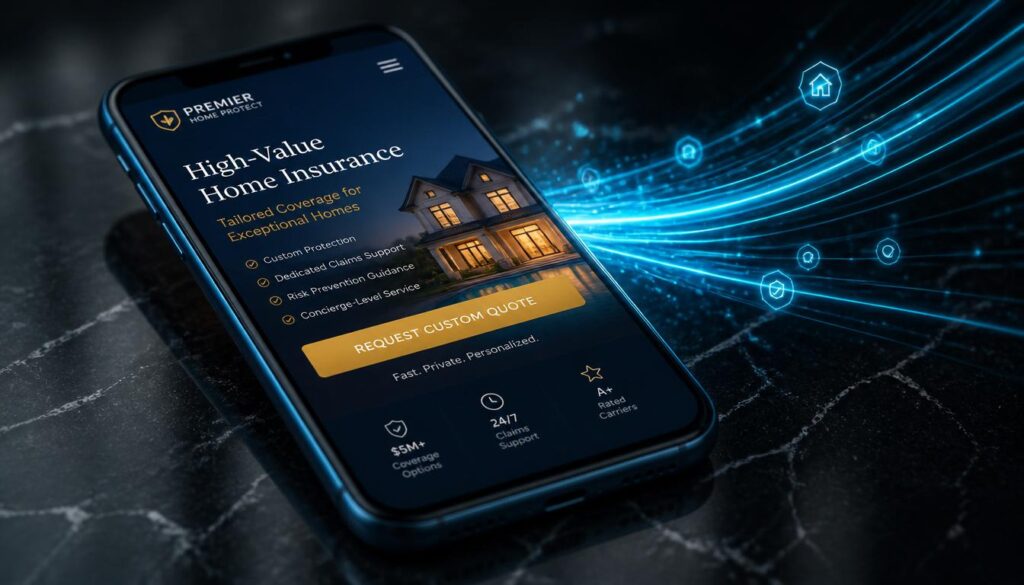
- High-value home insurance
- Multi-property coverage
- First-time homeowner insurance
For example, a visitor searching for “property insurance for rental homes” should arrive on a page specifically discussing rental property coverage instead of a broad insurance overview.
Landing pages should include:
- Clear headlines
- Benefits-focused messaging
- Local trust indicators
- Strong calls to action
- Simple quote request forms
- Customer testimonials
- Frequently asked questions
When home insurance agencies create service-specific landing pages, they improve both SEO performance and lead generation quality.
Use SEO to Attract High-Intent Home Insurance Traffic
Search engine optimization remains one of the best long-term strategies for generating qualified home insurance leads. Organic traffic often converts better because users are actively searching for insurance solutions.
Effective SEO for home insurance companies includes:
Local SEO
Many homeowners prefer working with local insurance agencies. Optimizing for location-based searches helps agencies attract nearby prospects.
Examples include:
- Home insurance in Dallas
- Property insurance agency near me
- Homeowners insurance in Austin
- Best home insurance company in Houston
Local SEO strategies should include:
- Google Business Profile optimization
- Local landing pages
- City-specific content
- Local backlinks
- Consistent directory listings
- Customer reviews
Informational Content Marketing
Many homeowners begin with educational searches before requesting quotes. Agencies can capture early-stage traffic through informative blog content.
Examples include:
- How much home insurance coverage do I need?
- What does homeowners insurance cover?
- How does property insurance work?
- What affects home insurance premiums?
- Does home insurance cover storm damage?
Educational content builds authority and positions agencies as trusted advisors.
Commercial Intent Keywords
High-converting traffic often comes from users searching with commercial intent.
Examples include:
- Best home insurance companies
- Affordable property insurance
- Compare home insurance quotes
- Home and property insurance agency
- Home insurance quote online
Optimizing pages around these keywords helps attract visitors closer to making purchasing decisions.
Improve Website Speed and User Experience
Website performance has a direct impact on lead generation. If pages load slowly or navigation feels confusing, users leave quickly.
Home insurance agencies should focus on:
- Fast page loading times
- Mobile-friendly design
- Clear navigation menus
- Easy-to-read layouts
- Simple forms
- Visible contact information
- Secure website connections
Many consumers research insurance on mobile devices. A poor mobile experience can significantly reduce conversions.
User experience should prioritize simplicity. Visitors should immediately understand:
- What the agency offers
- Why the agency is trustworthy
- How to request a quote
- How to contact an agent
Reducing friction throughout the customer journey increases the likelihood of conversion.
Create Strong Calls to Action
Calls to action play a major role in converting website traffic into qualified leads. Many home insurance websites use weak or unclear CTAs that fail to motivate users.
Effective CTAs should feel direct and action-oriented.
Examples include:
- Get Your Free Home Insurance Quote
- Compare Property Insurance Options
- Speak With a Local Insurance Agent
- Protect Your Home Today
- Request Customized Coverage Information
Calls to action should appear throughout the website, including:
- Homepage banners
- Service pages
- Blog posts
- Sidebar sections
- Contact pages
- Mobile sticky buttons
The easier it is for users to take action, the higher the conversion rate becomes.
Simplify Quote Request Forms
Long forms often discourage potential customers from completing inquiries. While agencies need enough information to qualify leads, asking for too much too early can reduce conversions.
High-performing home insurance quote forms usually include:
- Name
- Phone number
- ZIP code
- Property type
- Coverage interest
Additional details can be gathered later during consultations.
Multi-step forms can also improve completion rates because they feel less overwhelming. For example:
Step 1: Property information
Step 2: Coverage preferences
Step 3: Contact information
Simple forms help generate more qualified home insurance leads without frustrating users.

Use Trust Signals Throughout the Website
Insurance decisions involve significant financial responsibility. Homeowners want reassurance before sharing personal information or purchasing policies.
Trust signals help build confidence and credibility.
Examples include:
- Customer testimonials
- Online reviews
- Industry certifications
- Awards and recognitions
- Years of experience
- Claims support information
- Partner carrier logos
- Security badges
Social proof is especially powerful in the home and property insurance industry. Real customer experiences help reduce hesitation and improve lead quality.
Agencies should also feature transparent messaging about:
- Claims processes
- Coverage options
- Customer support
- Policy comparisons
Consumers trust agencies that appear knowledgeable and transparent.
Add Live Chat and Instant Communication Options
Many website visitors leave because they cannot get immediate answers. Live chat tools allow agencies to engage prospects before they abandon the site.
Live chat can help answer questions such as:
- What policies are available?
- How much coverage is needed?
- Does insurance cover specific damages?
- How quickly can quotes be provided?
Chat tools improve engagement and help qualify leads in real time.
Other communication options include:
- SMS messaging
- Click-to-call buttons
- Video consultations
- AI chat assistants
- Appointment scheduling tools
Fast communication creates better user experiences and increases lead conversion opportunities.
Use Retargeting to Re-Engage Website Visitors
Most home insurance website visitors do not convert during their first visit. Retargeting campaigns help agencies reconnect with users who previously visited the site.
Retargeting can remind visitors about:
- Unfinished quote requests
- Coverage options
- Insurance savings
- Seasonal insurance needs
- Local policy offers
Display ads, email campaigns, and social media remarketing help keep agencies visible during the decision-making process.
Retargeting works especially well for home insurance because many consumers spend days or weeks researching before selecting providers.
Develop Educational Lead Magnets
Lead magnets encourage visitors to exchange contact information for valuable resources. These resources help home insurance agencies generate qualified leads while educating consumers.
Examples include:
- Home insurance checklists
- Storm preparation guides
- Property protection ebooks
- Coverage comparison worksheets
- Home inventory templates
- First-time homeowner insurance guides
Educational downloads position agencies as helpful experts instead of aggressive sales organizations.
Once users provide contact information, agencies can nurture them through email marketing campaigns.
Use Email Marketing to Nurture Prospects
Not every visitor is ready to purchase immediately. Email marketing helps agencies stay connected with prospects until they are ready to buy.
Effective home insurance email campaigns may include:
- Policy education
- Seasonal home protection tips
- Coverage reminders
- Insurance savings advice
- Claims prevention tips
- Customer success stories
Automated email sequences can nurture leads over time and encourage future consultations.
For example:
Day 1: Welcome email
Day 3: Home insurance basics
Day 7: Coverage comparison guide
Day 10: Request a personalized quote
Email marketing keeps agencies top-of-mind throughout the research process.

Track User Behavior and Conversion Data
Successful home insurance marketing requires data-driven optimization. Agencies should regularly analyze website behavior and conversion performance.
Key metrics include:
- Bounce rate
- Time on page
- Conversion rates
- Form completions
- Call tracking
- Traffic sources
- Landing page performance
- Mobile engagement
Analytics tools help agencies identify where users drop off in the sales funnel.
For example:
- Are visitors abandoning quote forms?
- Are certain blog posts generating leads?
- Which traffic sources convert best?
- Which pages have low engagement?
Understanding user behavior helps agencies improve conversion strategies continuously.
Use Video Content to Build Trust
Video marketing has become increasingly valuable for home insurance agencies. Many consumers prefer watching videos instead of reading long explanations.
Video content can include:
- Home insurance FAQs
- Claims process explanations
- Property protection tips
- Customer testimonials
- Agent introductions
- Coverage breakdowns
Videos help humanize insurance agencies and improve trust.
Short videos placed on landing pages can significantly increase engagement and conversions.
Personalize the Website Experience
Personalization helps make users feel understood and valued. Modern consumers expect relevant experiences based on their interests and behavior.
Personalization strategies may include:
- Location-based content
- Personalized quote recommendations
- Returning visitor messaging
- Customized email follow-ups
- Dynamic landing page content
For example, visitors researching flood insurance may later see flood-related resources or quote offers.
Personalized experiences improve engagement and create stronger sales opportunities.
Optimize for Mobile Home Insurance Searches
Mobile traffic continues to dominate many insurance websites. Homeowners often research policies using smartphones and tablets.
Mobile optimization should include:
- Fast mobile loading
- Click-to-call functionality
- Easy form completion
- Mobile-friendly navigation
- Readable text formatting
- Compressed images
Mobile users typically want convenience and speed. Poor mobile experiences often lead to lost opportunities.
Agencies that prioritize mobile optimization improve both SEO performance and lead generation results.
Use Social Proof and Customer Reviews
Reviews strongly influence purchasing decisions in the insurance industry. Homeowners want reassurance that agencies provide reliable service and support.
Agencies should encourage satisfied customers to leave reviews on:
- Yelp
- Insurance directories
Positive reviews improve both local SEO and conversion rates.
Testimonials should also appear throughout the website, especially on:
- Landing pages
- Quote request pages
- Service pages
- Homepage sections
Detailed reviews about claims support, responsiveness, and customer care help persuade prospective clients.
Align Content With Every Stage of the Buyer Journey
Different users visit insurance websites at different stages of readiness.
Top-of-funnel users may search:
- What is homeowners insurance?
- How does property insurance work?
Middle-of-funnel users may search:
- Best home insurance coverage
- Compare home insurance companies
Bottom-of-funnel users may search:
- Get home insurance quote
- Affordable home insurance near me
Agencies should create content that supports every stage of the buyer journey.
This strategy improves both organic visibility and lead quality.
Integrate CRM and Marketing Automation Tools
Customer relationship management systems help agencies organize leads and improve follow-up processes.
CRM tools can:
- Track lead sources
- Store customer interactions
- Automate follow-up emails
- Schedule consultations
- Assign sales tasks
- Monitor pipeline activity
Marketing automation improves efficiency while helping agencies respond quickly to inquiries.
Fast response times are critical in the competitive home insurance market.
Focus on Relationship Building Instead of Immediate Sales
Consumers often hesitate when they feel pressured. The best-performing home insurance agencies focus on helping prospects make informed decisions.
Educational marketing builds stronger long-term relationships and trust.
Instead of overly aggressive sales tactics, agencies should position themselves as:
- Trusted advisors
- Local experts
- Property protection specialists
- Helpful insurance consultants
Relationship-focused marketing generates higher-quality leads and stronger customer retention.