
How Can Local SEO For Doctors Attract More Private-Pay Patients?
Understanding the Value of Private-Pay Patients
Private-pay patients are individuals who pay directly for healthcare services instead of relying entirely on insurance providers. These patients may pay out of pocket for cosmetic procedures, wellness treatments, concierge medicine, dental services, mental health counseling, physical therapy, or specialized medical care.
For many doctors and medical practices, attracting more private-pay patients can increase profitability and reduce dependence on insurance reimbursements. Private-pay services often allow practices to maintain more control over pricing, scheduling, and patient experience.
However, private-pay patients usually have more choices. They often spend time researching doctors online before scheduling an appointment. This is where local SEO becomes extremely important.
Local SEO helps doctors appear in search results when people nearby search for medical services. A strong local SEO strategy can increase visibility, build trust, and bring more qualified leads to a medical practice.
What Is Local SEO For Doctors?
Local SEO, or local search engine optimization, is the process of improving a medical practice’s visibility in location-based search results.
For example, when someone searches for:
- “best dermatologist near me”
- “concierge doctor in Dallas”
- “private physical therapist in Austin”
- “cosmetic dentist in Chicago”
Google typically shows local search results that include maps, business listings, reviews, and nearby practices.
Doctors who optimize their online presence for local SEO have a better chance of appearing in these search results.
Local SEO focuses on several important areas, including:
- Google Business Profile optimization
- Local keywords
- Online reviews
- Website optimization
- Location pages
- Local backlinks
- Mobile-friendly design
- Consistent business information
When these elements work together, they help attract local patients who are actively searching for medical services.
Why Private-Pay Patients Search Online Before Choosing A Doctor
Private-pay patients are usually more selective than patients who simply choose doctors within an insurance network.
These patients often compare:
- Reviews
- Credentials
- Office appearance
- Website quality
- Online reputation
- Treatment options
- Pricing transparency
- Convenience
- Patient experience
Many private-pay patients also search for practices that specialize in luxury care, personalized treatment, wellness programs, or advanced medical procedures.
A doctor’s online presence can strongly influence whether a patient decides to call the office or continue searching elsewhere.
If your practice does not appear prominently in local search results, potential patients may never discover your services.
How Google Influences Patient Decisions
Google plays a major role in healthcare marketing.
When people need medical care, they often start with a search engine. Google provides immediate access to:
- Doctor reviews
- Maps
- Practice websites
- Directions
- Office hours
- Photos
- FAQs
- Appointment booking
The practices that appear near the top of search results often receive the most clicks and phone calls.
This visibility becomes even more valuable when targeting private-pay patients because these patients tend to perform detailed research before making decisions.
A well-optimized local SEO strategy helps your practice appear trustworthy, professional, and convenient.
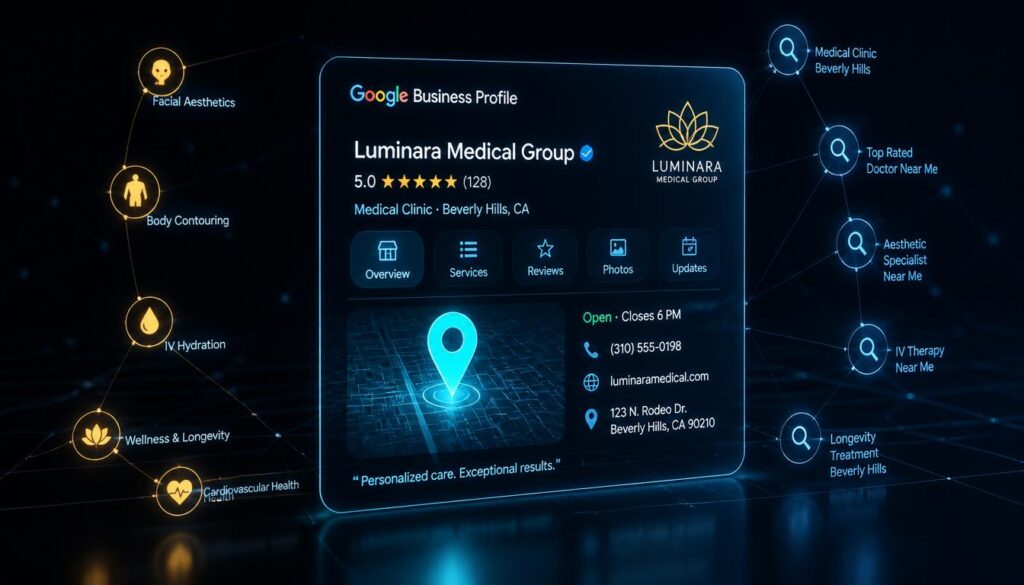
Optimizing Your Google Business Profile
One of the most important parts of local SEO is optimizing your Google Business Profile.
Your Google Business Profile appears in Google Maps and local search results. It often becomes the first impression potential patients see.
A complete and optimized profile can help increase calls, website visits, and appointment requests.
Important optimization steps include:
Use Accurate Practice Information
Your practice name, address, and phone number should be accurate and consistent everywhere online.
Incorrect information can confuse patients and hurt local rankings.
Choose The Right Categories
Google allows businesses to select categories that describe their services.
Doctors should choose categories that match their specialties and private-pay offerings.
Examples may include:
- Cosmetic dermatologist
- Family physician
- Plastic surgeon
- Chiropractor
- Wellness center
- Concierge medicine practice
Choosing the right categories helps Google understand which searches your practice should appear for.
Add Professional Photos
High-quality photos help create trust.
Consider uploading:
- Office photos
- Staff photos
- Reception area images
- Treatment rooms
- Exterior signage
Professional images make practices appear more credible and welcoming.
Collect Positive Reviews
Patient reviews strongly influence both rankings and patient decisions.
Many private-pay patients compare reviews before contacting a doctor.
Encourage satisfied patients to leave honest reviews on Google.
Responding professionally to reviews also demonstrates strong patient care.
Using Local Keywords To Reach More Patients
Keywords are phrases people type into Google.
Local SEO for doctors depends heavily on targeting location-based keywords.
Examples include:
- “private doctor in Houston”
- “best cosmetic dentist in Miami”
- “concierge medicine near me”
- “weight loss clinic in Phoenix”
These keywords should appear naturally throughout your website.
Important places to use local keywords include:
- Page titles
- Meta descriptions
- Headers
- Service pages
- Blog posts
- URLs
- Image descriptions
Using the right keywords helps search engines connect your practice with local patient searches.
Creating Service Pages For Private-Pay Treatments
Many doctors make the mistake of placing all services on one page.
This approach can limit SEO performance.
Instead, practices should create dedicated pages for important services.
For example, a dermatology practice may create separate pages for:
- Botox
- Chemical peels
- Acne treatment
- Laser resurfacing
- Skin tightening
A dental practice may create pages for:
- Veneers
- Dental implants
- Teeth whitening
- Invisalign
- Smile makeovers
Dedicated pages allow doctors to target highly specific keywords.
They also help educate patients about each treatment.
This strategy improves both SEO visibility and conversion rates.
Building Trust Through Educational Content
Private-pay patients often spend time researching treatments before booking appointments.
Educational content can help doctors build authority and trust.
Helpful blog topics may include:
- Treatment benefits
- Recovery expectations
- Cost considerations
- Procedure comparisons
- Frequently asked questions
- Wellness advice
- Preventive healthcare tips
Content marketing also supports SEO because Google favors websites that provide useful information.
Fresh content can increase website traffic and improve rankings over time.
Why Online Reviews Matter For Private-Pay Patients
Reviews are one of the most powerful factors in local SEO.
Private-pay patients usually want reassurance before spending money on medical services.
Strong reviews can increase confidence and encourage appointments.
Patients often look for:
- Positive experiences
- Friendly staff
- Clean facilities
- Professional bedside manner
- Successful outcomes
- Short wait times
Doctors should actively encourage reviews from satisfied patients.
Simple review requests through email or text message can help generate more feedback.
It is also important to respond politely to both positive and negative reviews.
Professional responses show that the practice values patient experiences.
Mobile Optimization Is Essential
Many healthcare searches happen on mobile devices.
Potential patients often search for nearby doctors while using smartphones.
If a website loads slowly or looks difficult to navigate on mobile devices, visitors may leave quickly.
A mobile-friendly medical website should include:
- Fast loading speeds
- Easy navigation
- Large text
- Clickable phone numbers
- Simple contact forms
- Mobile appointment scheduling
Google also prioritizes mobile-friendly websites in search rankings.
Improving mobile usability can increase both traffic and patient conversions.
Using Location Pages To Expand Local Visibility
Doctors serving multiple cities or neighborhoods can benefit from location pages.
Each location page should target a specific geographic area.
For example:
- “Dermatologist in Beverly Hills”
- “Concierge Doctor in Scottsdale”
- “Cosmetic Dentist in Fort Worth”
These pages should contain unique content instead of copied text.
Strong location pages may include:
- Local landmarks
- Community references
- Directions
- Nearby neighborhoods
- Testimonials
- Area-specific services
Location pages help practices rank for searches in multiple areas.
The Importance Of Website Design In Local SEO
Website quality can strongly influence patient decisions.
Private-pay patients often expect a professional online experience.
An outdated website may reduce trust.
A modern medical website should feature:
- Professional branding
- Clear navigation
- Fast load times
- Strong calls to action
- Easy appointment booking
- Patient testimonials
- Educational content
- High-quality images
A clean and professional design helps convert website visitors into paying patients.
Local Backlinks Help Build Authority
Backlinks are links from other websites pointing to your practice website.
Google views quality backlinks as signs of credibility.
Doctors can build local backlinks through:
- Medical directories
- Chamber of commerce websites
- Local news features
- Sponsorships
- Community events
- Healthcare partnerships
- Guest articles
Quality backlinks can improve search rankings and increase local visibility.
Schema Markup Helps Search Engines Understand Your Practice
Schema markup is structured data added to websites.
It helps search engines understand business details more clearly.
Medical schema may include:
- Practice name
- Specialty
- Address
- Phone number
- Reviews
- Office hours
- Services
Schema markup can improve search visibility and increase click-through rates.
Consistency Across Online Directories Matters
Doctors often appear in multiple online directories.
Examples include:
- Healthgrades
- WebMD
- Yelp
- Zocdoc
- Vitals
- Bing Places
Your business information should remain consistent across all platforms.
Even small differences in:
- Address formatting
- Phone numbers
- Business names
can confuse search engines.
Consistent listings strengthen local SEO performance.

How Content Supports Long-Term SEO Growth
SEO is not a one-time task.
Consistent content creation helps practices maintain and improve rankings over time.
Doctors who regularly publish content can:
- Target new keywords
- Answer patient questions
- Increase website traffic
- Build authority
- Improve trust
Examples of effective medical content include:
- Blogs
- FAQs
- Videos
- Patient guides
- Case studies
- Procedure explanations
Long-term content strategies can produce steady organic traffic and patient leads.
Social Media Can Support Local SEO
Social media does not directly control Google rankings, but it can support local visibility.
Active social media profiles help practices:
- Build brand awareness
- Share educational content
- Promote reviews
- Highlight patient success stories
- Increase engagement
Social media activity can also drive traffic to your website.
Platforms often used by medical practices include:
- YouTube
- TikTok
Visual platforms are especially helpful for cosmetic and wellness-focused practices.
Why Reputation Management Matters
Private-pay patients often research doctors carefully before making decisions.
Negative reviews, poor branding, or outdated content can discourage appointments.
Reputation management involves:
- Monitoring reviews
- Responding professionally
- Updating business information
- Publishing positive content
- Addressing patient concerns
A strong reputation improves trust and conversion rates.
Tracking SEO Performance
Doctors should monitor SEO performance regularly.
Tracking data helps practices understand what works and what needs improvement.
Important metrics include:
- Website traffic
- Keyword rankings
- Phone calls
- Appointment requests
- Bounce rate
- Conversion rates
- Google Business Profile activity
SEO campaigns can be adjusted based on performance data.
This allows practices to improve results over time.
Why Private-Pay Practices Benefit More From SEO
SEO is valuable for nearly every healthcare practice, but it can be especially powerful for private-pay services.
Private-pay patients usually:
- Research extensively online
- Compare providers carefully
- Focus on quality and reputation
- Look for convenience
- Seek specialized treatments
This makes online visibility extremely important.
Doctors who dominate local search results can consistently attract higher-quality leads.
Unlike traditional advertising, SEO can continue generating traffic long after content is published.
This creates long-term marketing value.
Common Local SEO Mistakes Doctors Should Avoid
Many practices struggle with local SEO because of avoidable mistakes.
Common problems include:
Ignoring Google Business Profile Optimization
An incomplete profile can reduce visibility and patient trust.
Using Duplicate Website Content
Copying content across multiple pages can hurt rankings.
Neglecting Reviews
Failing to generate reviews can weaken credibility.
Slow Website Performance
Slow websites create poor user experiences.
Weak Calls To Action
Patients should easily understand how to contact the practice.
Inconsistent Business Information
Different addresses or phone numbers across platforms can damage SEO.
Avoiding these mistakes can improve local search performance.
How SEO Supports Patient Trust
Trust is extremely important in healthcare.
Patients want confidence before choosing a provider.
Strong SEO often improves trust because it increases:
- Visibility
- Professional presentation
- Review volume
- Educational content
- Website quality
When patients repeatedly see your practice across Google results, maps, reviews, and articles, they may feel more comfortable scheduling appointments.
Combining SEO With Conversion Optimization
Traffic alone is not enough.
Medical practices must also convert visitors into patients.
Conversion optimization may include:
- Online scheduling
- Simple contact forms
- Live chat
- Clear pricing information
- Patient testimonials
- FAQ sections
- Before-and-after galleries
These features help encourage action after patients visit the website.
The Long-Term Value Of Local SEO
Many forms of advertising stop producing leads once spending ends.
SEO works differently.
A strong local SEO strategy can continue generating patient inquiries for months or years.
Over time, practices can build:
- Higher rankings
- Greater authority
- Stronger brand recognition
- More reviews
- Better patient trust
This long-term visibility can reduce reliance on expensive paid advertising.
Why Doctors Should Invest In Professional SEO Services
Medical SEO can be highly competitive.
Many practices compete for the same patients and keywords.
Professional SEO services can help doctors:
- Identify valuable keywords
- Optimize websites
- Improve technical SEO
- Build local authority
- Increase rankings
- Generate leads
- Track performance
Experienced healthcare SEO professionals understand both search engine requirements and patient behavior.
This expertise can help practices attract more private-pay patients more efficiently.
Final Thoughts
Local SEO has become one of the most effective marketing strategies for doctors who want to attract more private-pay patients.
Today’s patients rely heavily on Google when researching healthcare providers. Practices that appear prominently in local search results often receive more visibility, more inquiries, and more appointments.
By optimizing Google Business Profiles, improving websites, generating reviews, creating educational content, and targeting local keywords, doctors can strengthen their online presence and attract high-quality patients.
Private-pay patients are often looking for expertise, convenience, trust, and personalized care. A strong local SEO strategy helps communicate these qualities before patients even contact the office.
As competition in healthcare marketing continues to increase, doctors who invest in local SEO can position their practices for long-term growth and stronger patient acquisition.