How Can Property and Home Insurance Companies Rank Higher for Local Insurance Searches?
Property and home insurance companies face intense competition online. National carriers dominate search engine results, while regional agencies and independent brokers compete for visibility in local markets. Many potential customers now search online before requesting a quote, comparing providers, or contacting an insurance agent. Searches such as “home insurance near me,” “property insurance company in Dallas,” or “best homeowners insurance agent in Charleston” often lead consumers directly to local providers.
For insurance companies that want more leads, stronger brand awareness, and increased policy sales, ranking higher in local insurance searches is essential. The good news is that digital marketing strategies beyond paid advertising can produce long-term results and sustainable traffic growth.
Local SEO, content marketing, reputation management, website optimization, social media engagement, and other organic strategies can help property and home insurance companies improve online visibility while building trust with local audiences.
Why Local Search Matters for Insurance Companies
Most insurance customers prefer working with companies they can trust, especially when protecting homes and valuable property. Local search helps insurance companies connect with nearby homeowners actively looking for coverage.
Search engines prioritize businesses that demonstrate strong local relevance. When users search for home insurance services in a particular city or neighborhood, Google attempts to show businesses with strong local signals, accurate business information, helpful content, positive reviews, and optimized websites.
Local search visibility matters because:
- Consumers often choose businesses from the first page of search results
- Mobile searches frequently lead to phone calls or quote requests
- Local intent searches usually indicate high buying intent
- Strong rankings increase brand trust and authority
- Organic traffic produces long-term lead generation opportunities
Property insurance companies that invest in organic digital marketing can continue generating leads without relying entirely on expensive advertising campaigns.
Build a Strong Local SEO Foundation
Local SEO is one of the most effective strategies for insurance companies trying to rank higher in geographic searches.
Search engines analyze location-based signals to determine which businesses appear in local search results. Insurance agencies should optimize every aspect of their online presence for their target locations.
Optimize Google Business Profile
A fully optimized Google Business Profile is critical for local rankings. Insurance companies should ensure that their profile includes:
- Accurate business name
- Correct address and phone number
- Website URL
- Updated office hours
- Insurance-related service categories
- High-quality office photos
- Detailed service descriptions
Businesses should also regularly post updates, answer questions, and respond to customer reviews.
Google Business Profile optimization helps agencies appear in Google Maps results and local search packs, which often receive significant user attention.
Create Location-Specific Service Pages
Many insurance websites make the mistake of creating one generic service page for all locations. Local search performance improves when agencies develop individual pages targeting specific cities, counties, or service areas.
Examples include:
- Home Insurance in Austin, TX
- Property Insurance in Greenville, SC
- Homeowners Insurance in Charleston, WV
Each page should include unique content relevant to the local market. Insurance companies can discuss:
- Weather risks in the area
- Local property values
- Regional insurance concerns
- State insurance requirements
- Community-specific coverage recommendations
Localized pages help search engines understand geographic relevance while improving the user experience.
Invest in High-Quality Content Marketing
Content marketing remains one of the most effective long-term SEO strategies for insurance companies.
Publishing informative and locally relevant content helps businesses attract organic traffic while building authority in search engines.
Write Educational Blog Articles
Homeowners often search for answers before purchasing insurance. Educational blog content helps insurance companies capture traffic from informational searches.
Examples of effective topics include:
- What Does Homeowners Insurance Cover?
- How Much Property Insurance Do You Need?
- Common Home Insurance Claims in Coastal Areas
- Does Home Insurance Cover Flood Damage?
- Tips for Lowering Home Insurance Premiums
Locally targeted topics can perform especially well, such as:
- Hurricane Insurance Tips for Florida Homeowners
- Winter Storm Property Damage Risks in West Virginia
- Wildfire Insurance Considerations in Texas
Helpful content increases website engagement, builds trust, and improves keyword visibility.
Target Long-Tail Insurance Keywords
Highly competitive keywords like “home insurance” are difficult to rank for. Long-tail keywords are often easier to target and usually attract more qualified traffic.
Examples include:
- affordable home insurance in Dallas
- best homeowners insurance for new homes
- local property insurance agents near me
- insurance for rental property owners
- home insurance for older houses
Long-tail keywords align closely with user intent and can generate higher conversion rates.
Insurance companies should naturally incorporate these keywords into:
- Service pages
- Blog posts
- FAQs
- Meta descriptions
- Headers
- Image alt text
Keyword stuffing should always be avoided because it harms readability and search performance.
Improve Website Speed and Mobile Experience
Search engines prioritize websites that provide excellent user experiences. Slow-loading or outdated websites can negatively affect rankings and lead generation.
Insurance companies should ensure that their websites:
- Load quickly on mobile devices
- Use responsive design
- Feature clear navigation
- Include visible contact information
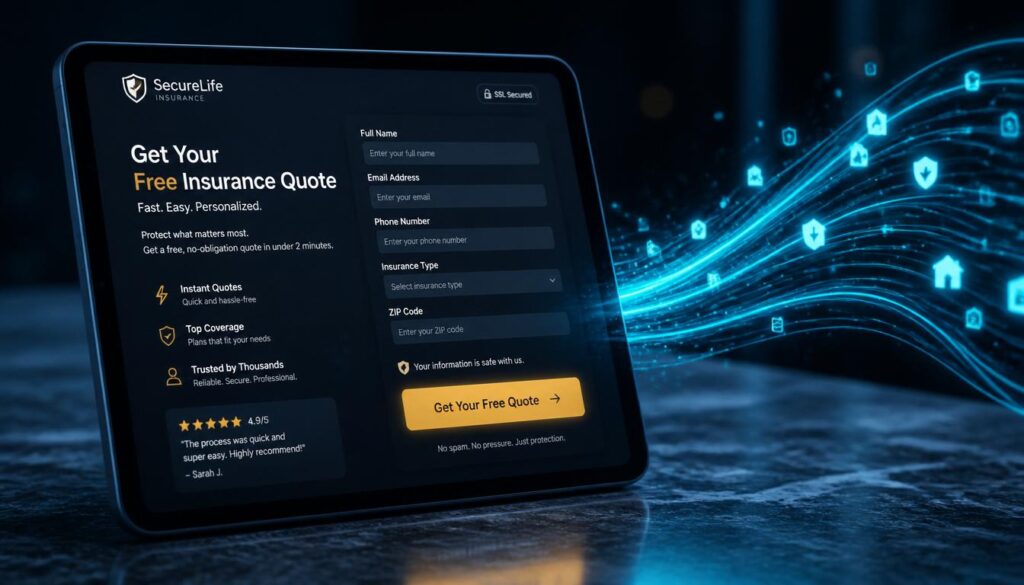
- Offer simple quote request forms
- Use secure HTTPS connections
Many insurance searches occur on smartphones. A mobile-friendly website can significantly improve conversion rates and local search performance.
Focus on Technical SEO
Technical SEO helps search engines properly crawl, index, and understand website content.
Important technical SEO practices include:
Optimize Site Structure
Websites should have organized navigation and clear page hierarchies. Users and search engines should easily find service pages, blogs, contact pages, and quote forms.
Use Schema Markup
Schema markup provides search engines with structured information about the business.
Insurance companies can use local business schema to highlight:
- Business name
- Address
- Phone number
- Reviews
- Operating hours
- Service areas
Schema can improve visibility in search results and increase click-through rates.
Fix Broken Links and Errors
Broken pages, redirect errors, and crawl issues can negatively impact rankings. Regular SEO audits help identify technical problems before they harm visibility.

Get Genuine and Positive Online Reviews
Online reputation management plays a major role in local search rankings and consumer trust.
Potential customers frequently compare reviews before contacting an insurance company. Positive reviews can improve both search visibility and conversion rates.
Insurance agencies should encourage satisfied clients to leave reviews on:
- Yelp
- Better Business Bureau
- Industry-specific directories
Companies should also respond professionally to all reviews, including negative feedback.
Review responses demonstrate professionalism, customer service quality, and engagement.
Build Local Citations and Directory Listings
Local citations are mentions of a business across online directories and websites.
Consistent listings help search engines verify business legitimacy and location accuracy.
Insurance companies should ensure consistent information across:
- Google Business Profile
- Yelp
- Bing Places
- Apple Maps
- Chamber of Commerce websites
- Insurance directories
- Local business directories
Consistency is important. The business name, address, and phone number should match across all platforms.
Develop Local Link Building Strategies
Backlinks remain one of the strongest ranking factors in SEO.
Local backlinks from reputable websites help insurance companies improve authority and local relevance.
Effective Local Link Building Methods
Insurance companies can earn local backlinks by:
- Sponsoring community events
- Partnering with local charities
- Joining business organizations
- Publishing local market reports
- Writing guest articles for local publications
- Participating in community outreach programs
Local newspapers, business associations, and nonprofit organizations often provide valuable backlink opportunities.
Use Video Marketing to Increase Engagement
Video marketing continues to grow in importance for SEO and user engagement.
Insurance companies can create videos covering:
- Home insurance basics
- Claims processes
- Coverage explanations
- Home protection tips
- Disaster preparedness advice
- Frequently asked questions
Videos can appear in Google search results and increase time spent on the website.
Publishing videos on platforms like YouTube can also generate additional organic traffic.
Leverage Social Media for Local Visibility
While social media may not directly affect rankings, it can amplify content reach, improve brand awareness, and drive traffic to the website.
Property insurance companies should maintain active profiles on platforms such as:
- YouTube
Social media content ideas include:
- Home maintenance tips
- Seasonal insurance reminders
- Local event participation
- Customer testimonials
- Claims guidance
- Community involvement updates
Consistent engagement helps insurance companies build trust within their communities.
Create Helpful FAQ Pages
FAQ pages can help insurance companies rank for voice searches and conversational queries.
Many users search using natural-language questions such as:
- How much homeowners insurance do I need?
- Does home insurance cover water damage?
- What affects home insurance rates?
- Is flood insurance separate from homeowners insurance?
Detailed FAQ sections improve user experience while helping websites target additional keywords.
Optimize for Voice Search
Voice search continues to influence local SEO strategies.
People using smart devices often search conversationally. Insurance companies should optimize content for natural-language queries.
Examples include:
- Who offers home insurance near me?
- What is the best homeowners insurance company in Dallas?
- How can I lower my home insurance premiums?
Voice-friendly content usually includes concise answers, FAQ sections, and conversational phrasing.
Publish Local Market Insights
Insurance companies can establish authority by publishing data-driven local content.
Examples include:
- Annual storm damage reports
- Local housing market trends
- Insurance claim statistics
- Regional risk assessments
This type of content can attract backlinks from journalists, bloggers, and community organizations while improving local relevance.
Use Email Marketing to Support SEO Efforts
Email marketing indirectly supports search visibility by driving traffic back to the website.
Insurance companies can send newsletters featuring:
- New blog posts
- Seasonal home protection tips
- Disaster preparedness checklists
- Policy reminders
- Community news
Email campaigns encourage repeat website visits and strengthen customer relationships.
Improve Conversion Optimization
Ranking higher in search results is only valuable if website visitors become leads or customers.
Insurance websites should prioritize conversion optimization by including:
- Clear calls to action
- Easy quote request forms
- Click-to-call buttons
- Trust signals
- Testimonials
- Licensing information
- Fast response options
Reducing friction in the lead generation process can significantly improve conversion rates.
Track SEO Performance and Analytics
Successful digital marketing requires continuous monitoring and improvement.
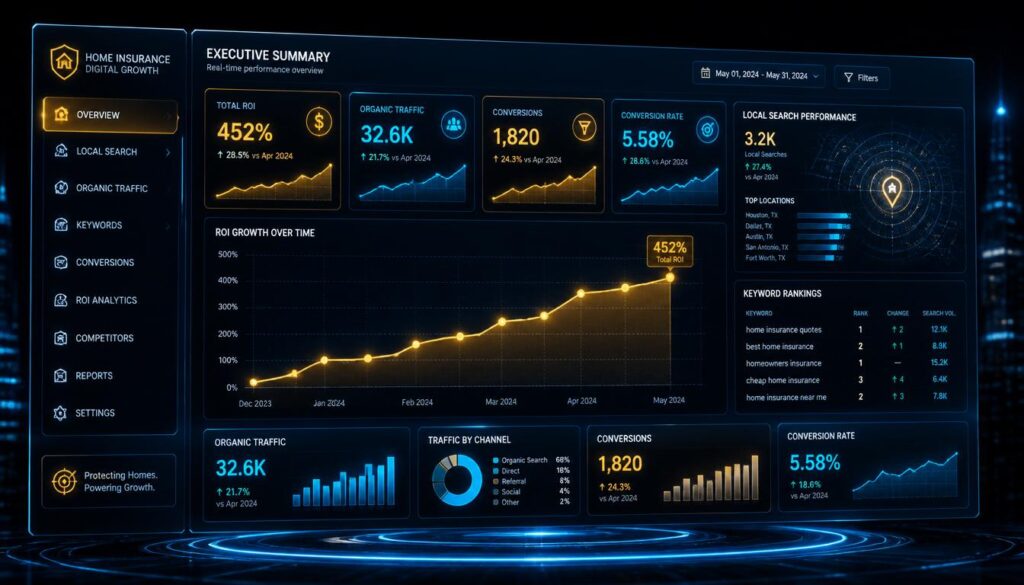
Insurance companies should regularly track:
- Organic traffic growth
- Keyword rankings
- Bounce rates
- Conversion rates
- Phone call leads
- Form submissions
- Local search visibility
Tools such as Google Analytics and Google Search Console help businesses understand which strategies produce the best results.
SEO is not a one-time effort. Ongoing optimization and analysis are necessary to remain competitive.
Develop a Long-Term Content Strategy
Many insurance companies expect immediate SEO results, but organic growth requires consistency.
A long-term content strategy should include:
- Regular blog publishing
- Updated service pages
- Seasonal content
- Video creation
- FAQ expansion
- Local market content
Search engines reward websites that consistently provide valuable, updated information.
Over time, this content builds authority, strengthens rankings, and increases organic lead generation opportunities.
Build Trust Through Transparency
Trust is essential in the insurance industry.
Consumers want to work with companies that appear reliable, knowledgeable, and transparent.
Insurance companies can strengthen trust by:
- Displaying agent credentials
- Featuring customer testimonials
- Providing clear policy explanations
- Publishing educational content
- Maintaining professional branding
- Responding promptly to inquiries
Trust signals improve both user engagement and conversion performance.
Stay Competitive With Ongoing SEO Updates
Search engine algorithms continue evolving. Insurance companies that fail to adapt may lose rankings to competitors.
Businesses should stay informed about:
- SEO best practices
- Google algorithm updates
- User experience trends
- Mobile optimization standards
- Local search developments
Working with experienced SEO professionals or maintaining an in-house digital marketing strategy can help insurance companies remain competitive.