
What Are the Best Practices for Web Design for Home & Property Insurance Company Websites?
A well-designed insurance website does far more than look professional. For home insurance companies and property insurance companies, the website is often the first interaction potential policyholders have with the brand. Visitors judge trust, credibility, responsiveness, and professionalism within seconds of landing on a page.
Today’s consumers expect insurance websites to load quickly, explain coverage clearly, work perfectly on mobile devices, and make it easy to request quotes or speak with an agent. If a property insurance website feels outdated, confusing, or slow, visitors will likely leave and contact a competitor instead.
Modern web design for insurance companies is not just about aesthetics. It directly impacts lead generation, SEO rankings, user engagement, and conversion rates. The best-performing home insurance websites are built around user experience, search visibility, trust signals, and conversion optimization.
Below are the most effective web design best practices for home insurance and property insurance companies that want to generate more qualified leads and improve online
Simplify Website Navigation
Insurance information can already feel overwhelming to consumers. Complex website navigation only increases frustration.
The best home insurance company websites use simple and intuitive navigation structures.
Main navigation menus should clearly organize:
- Home insurance services
- Property insurance coverage
- About the company
- Claims information
- Contact pages
- Blog resources
- Quote request pages
Avoid overcrowded menus with too many dropdowns.
Users should reach important pages within a few clicks. Clean navigation improves:
- User experience
- Time on site
- Conversion rates
- Search engine crawling
- SEO performance
Simple navigation also helps older users who may not be comfortable with complicated websites.
Build Trust Immediately
Trust is critical in the insurance industry. Consumers need confidence that the company is reputable and reliable before sharing personal information.
Effective property insurance website design should establish credibility instantly.
Important trust elements include:
- Professional branding
- Client testimonials
- Insurance certifications
- Reviews and ratings
- Secure website encryption
- Real agent photos
- Years of experience
- Industry affiliations
Displaying trust signals throughout the website can significantly improve conversion rates.
Insurance websites should also include:
- Clear contact information
- Physical office locations
- Licensing details
- Privacy policies
- Transparent coverage explanations
Consumers are more likely to request quotes from companies that appear trustworthy and established.
Use Local SEO Web Design Strategies
Many home insurance companies rely heavily on local customers. Web design should support local SEO efforts from the beginning.
Local SEO-focused website design helps insurance companies rank higher for searches like:
- home insurance company near me
- property insurance agency in [city]
- homeowners insurance quotes
- local property insurance provider
Best practices include:
- Dedicated city pages
- Location-specific service pages
- Embedded Google Maps
- Local business schema markup
- Optimized title tags
- Internal linking
- Fast-loading pages
Every location page should contain unique content tailored to that specific market.
Property insurance companies operating in multiple cities should avoid duplicate content and create customized pages for each service area.
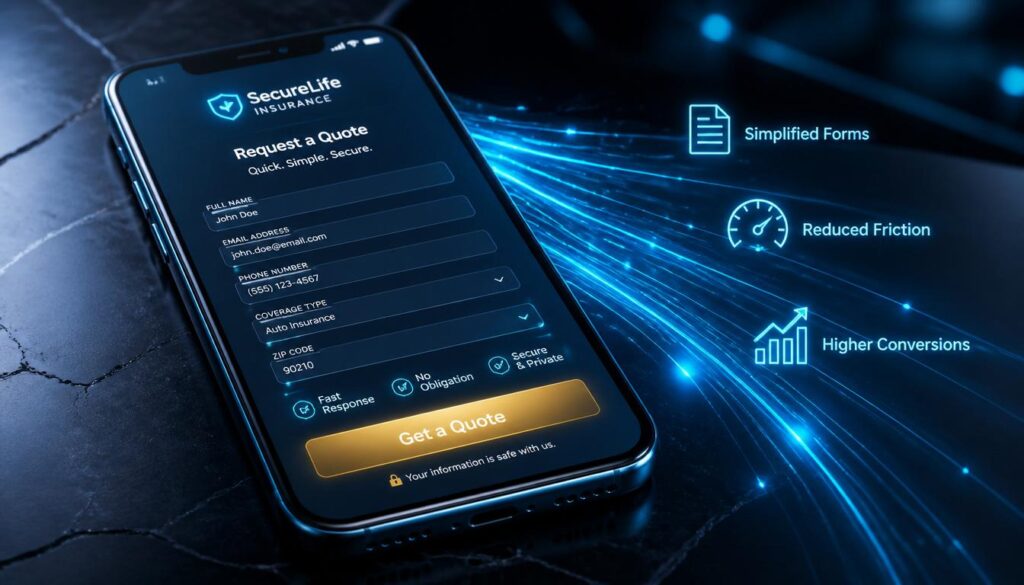
Make Quote Forms Short and Simple
Long and complicated quote forms reduce conversions.
Insurance companies often ask for too much information upfront, causing visitors to abandon the process.
The best-performing home insurance websites use shorter forms initially and collect additional details later.
A simple quote request form may only ask for:
- Name
- Phone number
- ZIP code
- Property type
Reducing friction can dramatically increase lead submissions.
Additional form optimization tips include:
- Use progress indicators
- Enable autofill
- Minimize required fields
- Optimize forms for mobile
- Use clear error messages
Simple forms improve user experience and lead generation.
Invest in High-Quality Visual Design
Visual presentation influences how consumers perceive insurance companies.
Outdated websites often appear less trustworthy and less professional.
Modern property insurance web design should include:
- Clean layouts
- Professional typography
- Consistent branding
- High-quality images
- Balanced spacing
- Modern color schemes
Avoid cluttered pages filled with excessive text and distracting elements.
Visual hierarchy is also important. Key information and calls to action should stand out immediately.
Professional website design helps:
- Increase trust
- Improve engagement
- Support conversions
- Strengthen brand perception
Consumers often associate website quality with company quality.
Use Educational Content Throughout the Website
Many insurance consumers have questions about policies, coverage limits, deductibles, and claims.
Educational content helps home insurance companies establish authority while improving SEO performance.
Helpful website content may include:
- Home insurance FAQs
- Property insurance guides
- Claims process explanations
- Coverage comparison articles
- Blog posts
- Disaster preparedness resources
Educational content supports:
- Organic search traffic
- Customer trust
- Longer website visits
- Lead nurturing
- Search engine rankings
Insurance companies that regularly publish helpful content often perform better in organic search results than competitors with static websites.
Optimize for Conversion Rate Improvement
A visually attractive website is not enough. Insurance websites should be designed specifically to convert visitors into leads.
Conversion-focused web design includes:
- Clear calls to action
- Strategic button placement
- Simple forms
- Trust signals
- Fast loading pages
- User-friendly layouts
Home insurance companies should regularly test:
- Headlines
- Quote buttons
- Form layouts
- Landing pages
- Navigation structures
Even small design changes can improve conversion rates significantly.
High-converting insurance websites focus on removing friction and making the customer journey simple.
Improve Accessibility
Accessible web design ensures all users can navigate and understand the website, including those with disabilities.
Accessibility also improves usability overall.
Best practices include:
- Proper color contrast
- Readable fonts
- Alt text for images
- Keyboard navigation support
- Clear headings
- Screen-reader compatibility
Accessibility improvements can help property insurance companies:
- Reach wider audiences
- Improve user experience
- Reduce legal risks
- Support SEO performance
Accessible websites are often easier for all users to navigate.
Use Strong Internal Linking
Internal linking helps users discover more information while supporting SEO.
For example, a homeowners insurance page may link to:
- Flood insurance pages
- Claims information
- Local office pages
- Blog articles
- Quote request forms
Strong internal linking:
- Improves crawlability
- Increases time on site
- Helps distribute page authority
- Improves user experience
Insurance websites with organized internal linking structures often perform better in search rankings.
Add Live Chat and Instant Contact Features
Consumers increasingly expect instant communication options.
Live chat tools can help home insurance companies capture leads that might otherwise leave the website.
Helpful features include:
- Live chat support
- Click-to-call buttons
- SMS messaging
- Instant quote scheduling
- AI chat assistants
These features improve:
- Lead response times
- User engagement
- Conversion opportunities
Fast communication is especially important for property insurance inquiries after storms, accidents, or emergencies.
Keep Content Updated Regularly
Outdated insurance websites damage credibility.
Regular updates signal professionalism and help support SEO visibility.
Insurance companies should regularly review:
- Coverage information
- Blog content
- Team pages
- Contact details
- Testimonials
- Service pages
Fresh content can help property insurance websites rank for more keywords and maintain user trust.
Integrate SEO Into the Design Process
SEO should never be added after the website is built. It should be integrated into the design process from the beginning.
SEO-friendly web design includes:
- Clean code
- Fast page speed
- Mobile responsiveness
- Proper heading structure
- Optimized metadata
- Internal linking
- Schema markup
Insurance companies that combine SEO and web design effectively can:
- Increase organic traffic
- Generate more leads
- Improve visibility in Google search
- Reduce reliance on paid advertising
A beautiful website without SEO may struggle to attract visitors.

Use Homepage Messaging That Explains Value Immediately
Many insurance websites waste valuable homepage space with vague slogans that do not clearly explain what the company offers.
Visitors should immediately understand:
- What type of insurance the company provides
- Who the company serves
- Why customers should trust the business
- What action they should take next
Strong homepage messaging for home insurance companies may include:
- Affordable Home Insurance Coverage for Homeowners
- Trusted Property Insurance Solutions for Families and Investors
- Protect Your Home With Customized Insurance Coverage
Clear messaging reduces confusion and improves conversion rates.
The homepage should also include:
- Main services
- Trust indicators
- Quote request options
- Contact information
- Coverage highlights
The first few seconds on the website are critical for retaining visitors.
Design Service Pages Around Search Intent
Many property insurance websites create generic service pages that do not target specific customer needs or SEO keywords.
Each insurance product should have its own dedicated page optimized around search intent.
Examples include:
- Homeowners Insurance
- Condo Insurance
- Rental Property Insurance
- Landlord Insurance
- Flood Insurance
- Fire Damage Insurance
- Commercial Property Insurance
Each page should answer common questions users may search for, including:
- What does the policy cover?
- Who needs this insurance?
- How much does it cost?
- What factors affect rates?
- How can someone get a quote?
Search-optimized service pages improve:
- Organic traffic
- Local search rankings
- User engagement
- Lead generation
Improve Readability With Better Content Formatting
Insurance content can quickly become difficult to read if pages contain large blocks of text.
Modern web design should improve readability through:
- Short paragraphs
- Clear headings
- Bullet points
- White space
- Bolded key information
- Visual separation between sections
Easy-to-read content keeps visitors engaged longer and improves user experience.
Good formatting also supports SEO because search engines can better understand page structure.
Insurance companies should avoid:
- Dense legal-style text
- Overly technical explanations
- Cluttered layouts
- Tiny font sizes
Clear communication helps customers feel more confident about coverage decisions.
Add Comparison Tools and Coverage Calculators
Interactive tools can significantly improve engagement on home insurance websites.
Examples include:
- Home insurance cost calculators
- Coverage comparison charts
- Deductible calculators
- Replacement cost estimators
- Risk assessment quizzes
Interactive tools help visitors better understand insurance needs while increasing time spent on the website.
These features can also improve lead generation because users become more invested in the process.
Property insurance companies that provide helpful digital tools often stand out from competitors with static websites.
Create Dedicated Claims Support Pages
Claims are one of the most important parts of the insurance customer experience.
Insurance websites should make claims information easy to find and easy to understand.
A dedicated claims section should include:
- How to file a claim
- Emergency contact numbers
- Claims timelines
- Required documentation
- Frequently asked questions
- Online claims submission forms
Clear claims support pages improve customer trust and reduce frustration during stressful situations.
Well-designed claims pages can also reduce support calls by answering common questions proactively.
Use Sticky Navigation and Persistent Contact Options
Visitors should always have easy access to navigation menus and contact buttons.
Sticky headers and floating contact buttons improve usability, especially on mobile devices.
Helpful persistent elements include:
- Sticky navigation bars
- Floating quote request buttons
- Click-to-call buttons
- Live chat icons
These features increase conversion opportunities by reducing friction.
Property insurance websites that make contacting an agent effortless often see higher lead conversion rates.
Add Video Content to Improve Engagement
Video can make insurance topics easier to understand.
Many consumers prefer watching short videos instead of reading lengthy explanations.
Useful video topics include:
- Home insurance coverage explanations
- Claims process walkthroughs
- Agent introductions
- Disaster preparedness tips
- Customer testimonials
Video content can improve:
- Time on site
- User engagement
- Trust
- SEO performance
Insurance companies should keep videos short, informative, and professionally produced.
Use Consistent Branding Across Every Page
Strong branding helps home insurance companies appear more professional and memorable.
Consistent branding includes:
- Logo placement
- Typography
- Color schemes
- Tone of voice
- Image style
- Button styles
Inconsistent branding can make websites feel untrustworthy or outdated.
A unified design system improves:
- Brand recognition
- User confidence
- Professional appearance
Property insurance companies should ensure every page reflects the same visual identity.

Reduce Website Clutter
Too many design elements can overwhelm visitors.
Insurance websites should focus on simplicity and clarity.
Common clutter issues include:
- Excessive popups
- Too many menu items
- Overloaded sidebars
- Distracting animations
- Too many competing calls to action
Minimalist web design often performs better because users can focus on the most important information.
Clean layouts improve:
- User experience
- Mobile usability
- Conversion rates
- Website speed
Simple websites also tend to age better visually over time.
Optimize Footer Design
The footer is often overlooked, but it plays an important role in navigation and SEO.
A strong footer for a home insurance website may include:
- Service links
- Contact information
- Office locations
- Licensing information
- Privacy policy
- Blog links
- Social media links
Footers help users quickly access important information without returning to the main menu.
Search engines also use footer links to better understand website structure.
Use Social Proof Throughout the Website
Customer reviews and testimonials help build trust with potential clients.
Property insurance websites should display:
- Google reviews
- Customer testimonials
- Star ratings
- Case studies
- Success stories
Social proof works best when placed strategically near calls to action and quote forms.
Testimonials should feel authentic and specific rather than generic.
Consumers often trust customer experiences more than marketing claims.
Design Around Customer Questions
The best insurance websites anticipate what customers want to know.
Instead of focusing only on company promotions, pages should answer practical questions like:
- What does homeowners insurance cover?
- Is flood insurance included?
- How quickly can I get coverage?
- What affects home insurance rates?
- What happens during the claims process?
Customer-focused design improves:
- SEO performance
- User engagement
- Trust
- Lead quality
Search engines increasingly reward websites that provide genuinely helpful information.
Improve Website Scalability
Insurance companies often expand services and locations over time.
A scalable website structure makes it easier to:
- Add new service pages
- Launch new locations
- Publish blog content
- Create landing pages
- Integrate new tools
Poor website architecture can make future growth difficult and expensive.
Flexible website frameworks help property insurance companies adapt to changing marketing strategies.
Use Schema Markup for Better SEO Visibility
Schema markup helps search engines better understand insurance website content.
Useful schema types include:
- Local business schema
- FAQ schema
- Review schema
- Service schema
- Organization schema
Schema markup can improve search visibility and increase click-through rates by enhancing search listings.
SEO-focused home insurance companies often use schema as part of broader search optimization strategies.
Include Strong About Pages
Consumers want to know who they are trusting with their insurance needs.
An effective About page should include:
- Company history
- Mission statement
- Team information
- Community involvement
- Industry experience
- Certifications and awards
About pages help humanize insurance brands and build credibility.
Real stories and authentic company details often resonate more than overly corporate language.
Use Strategic Landing Pages for Marketing Campaigns
Insurance companies running digital marketing campaigns should avoid sending traffic to generic pages.
Dedicated landing pages tailored to:
- Specific cities
- Insurance products
- Referral sources
- Seasonal promotions
typically convert better.
High-converting landing pages should:
- Focus on one main goal
- Use strong headlines
- Include trust signals
- Feature simple forms
- Remove distractions
Focused landing pages improve lead quality and campaign performance.
Prepare for AI Search and Voice Search
More consumers are using AI search tools and voice assistants to research insurance coverage.
Web design and content strategies should adapt by:
- Using conversational language
- Creating FAQ content
- Structuring pages clearly
- Answering direct questions
- Improving technical SEO
Home insurance companies that optimize for AI-driven search visibility may gain advantages in future search trends.
Clear website structure and helpful content are becoming increasingly important for AI search visibility.
Regularly Audit Website Performance
Web design is not a one-time project.
Insurance companies should regularly evaluate:
- User experience
- SEO rankings
- Conversion performance
- Mobile usability
- Page speed
- Technical issues
Regular audits help identify opportunities for improvement before problems impact lead generation.
Continuous optimization is often what separates high-performing insurance websites from stagnant competitors.