
What Makes A Good Law Firm Website In 2026?
A law firm website is often the first impression potential clients have of an attorney or legal practice. In 2026, people expect websites to load quickly, answer questions clearly, and make it easy to contact a lawyer. A law firm website is no longer just an online brochure. It has become a major part of client acquisition, brand building, local visibility, and trust.
The legal industry is highly competitive in the United States. Law firms in almost every practice area are competing for attention online. Potential clients often compare multiple firms before making a decision. They read reviews, browse attorney profiles, check practice areas, and look for signs of credibility.
A good law firm website helps attorneys stand out in search results while also making visitors feel confident enough to schedule a consultation. It combines professional design, useful content, strong search engine optimization, and user-friendly navigation.
Modern legal websites must also adapt to changing technology and consumer behavior. Mobile browsing continues to dominate internet traffic. Voice searches are more common. Artificial intelligence tools influence how people search online. Google’s search results continue to evolve with AI-generated summaries and local search features.
In 2026, successful law firm websites focus on user experience, trust, speed, authority, and conversion optimization. Firms that ignore these areas risk losing leads to competitors with stronger digital strategies.
This article explains what makes a good law firm website in 2026 and why these elements matter for attracting and converting potential clients.
Professional And Modern Website Design
A professional design remains one of the most important features of a successful law firm website. Visitors often form opinions within seconds of landing on a website. If the design looks outdated, cluttered, or confusing, users may leave before reading any information.
Modern law firm websites use clean layouts, organized spacing, readable fonts, and high-quality images. The design should look polished without being overly complicated. Simplicity often creates a more trustworthy appearance.
A modern legal website also reflects the law firm’s brand identity. Colors, typography, photography, and messaging should work together to create a consistent image. A personal injury law firm may use bold and confident branding, while an estate planning firm may prefer a calmer and more professional tone.
Good design also includes strong visual hierarchy. Important information such as practice areas, attorney experience, reviews, and contact forms should be easy to find. Visitors should never feel lost while browsing the site.
Professional photography is another important factor. Authentic photos of attorneys, staff members, and office spaces help build trust. Generic stock photos can sometimes make a law firm appear less credible.
In 2026, law firms that invest in modern website design are more likely to create positive first impressions and keep users engaged.
Mobile-Friendly Website Experience
Mobile optimization is no longer optional. Most users now browse websites using smartphones and tablets. Google also prioritizes mobile-friendly websites in search rankings.
A good law firm website must work smoothly on all screen sizes. The layout should automatically adjust for mobile devices. Text should remain readable without zooming. Buttons should be easy to tap. Navigation menus should be simple and responsive.
Potential clients often search for lawyers during stressful situations. Someone involved in a car accident or facing criminal charges may search for legal help from their phone immediately after an incident. If the website loads poorly or becomes difficult to use on mobile devices, the user may quickly leave.
Mobile-friendly design also improves lead generation. Contact forms, click-to-call buttons, and live chat features should function properly on smartphones.
Google’s search algorithms continue rewarding websites that deliver excellent mobile experiences. In 2026, firms that ignore mobile optimization may struggle to compete in organic search results.
Fast Website Loading Speed
Website speed plays a major role in user experience and search engine rankings. People expect websites to load almost instantly. Even a few extra seconds of loading time can increase bounce rates.
Law firm websites often include videos, images, animations, and interactive features. While these elements can improve appearance, they should never slow down the site.
A good law firm website uses optimized images, reliable hosting, clean coding practices, and caching systems to improve loading performance.
Fast websites help users access information quickly. Potential clients may already feel stressed or overwhelmed when searching for legal help. Slow websites create frustration and reduce trust.
Search engines also use website speed as a ranking factor. Faster websites generally perform better in Google search results.
In 2026, speed optimization remains essential for both SEO performance and user satisfaction.
Clear Navigation And Site Structure
Website visitors should easily find the information they need. Clear navigation improves user experience while helping search engines understand the site.
A good law firm website organizes information logically. Practice areas, attorney profiles, blog content, case results, FAQs, and contact information should all be accessible through simple navigation menus.
Users should not need multiple clicks to find basic information. Complicated menu structures often frustrate visitors.
Most successful law firm websites use a clear top navigation menu along with internal links throughout the site. Internal linking helps guide users to relevant content while supporting SEO.
Practice areas should have dedicated pages instead of listing all services on a single page. For example, a personal injury firm may create separate pages for:
- • Car accidents
- • Truck accidents
- • Motorcycle accidents
- • Slip and fall injuries
- • Wrongful death claims
- • Workplace accidents
This structure improves both usability and search visibility.
Good navigation also includes a visible contact button on every page. Users should always know how to reach the law firm.
High-Quality Legal Content
Content remains one of the most important parts of a successful law firm website.
Potential clients search online because they need answers. They want to understand legal problems, learn their options, and find trustworthy attorneys.
A good law firm website provides helpful, informative, and easy-to-read content. Legal topics can feel intimidating, so attorneys should avoid unnecessary legal jargon whenever possible.
Practice area pages should clearly explain:
- • What types of cases the firm handles
- • Common legal issues clients face
- • How the legal process works
- • Possible outcomes
- • Why clients should choose the firm
Educational blog articles also help law firms attract traffic through search engines. Informative content allows firms to target long-tail keywords and answer common questions.
Examples include:
- • What should I do after a car accident?
- • How long do I have to file a personal injury claim?
- • What happens during a divorce mediation?
- • How does bankruptcy affect my credit?
In 2026, content quality matters more than ever because Google continues prioritizing expertise, authority, and usefulness.
AI-generated search summaries also influence user behavior. Websites that provide detailed and trustworthy information are more likely to appear in these search features.
Law firms that consistently publish valuable content can strengthen brand authority and increase search visibility.
Strong Search Engine Optimization (SEO) for Lawyers and Law Firms
Search engine optimization remains essential for law firms that want to attract organic traffic.
A beautiful website means little if potential clients cannot find it online.
A good law firm website in 2026 includes strong SEO foundations. This involves optimizing both technical and content-related factors.
Important SEO elements include:
- • Keyword optimization
- • Fast website performance
- • Mobile responsiveness
- • Internal linking
- • Meta titles and descriptions
- • Structured data markup
- • Local SEO optimization
- • High-quality backlinks
- • Optimized images
- • User engagement signals
Keyword targeting should focus on both practice areas and local intent. For example:
- • Personal injury lawyer in Dallas
- • Chicago divorce attorney
- • Miami criminal defense lawyer
- • Estate planning attorney near me
Local SEO remains especially important for law firms because most legal clients search for attorneys within specific geographic areas.
Google Business Profile optimization also plays a major role in local visibility.
A good legal website supports local rankings by including location-specific pages, embedded maps, client reviews, and consistent business information.
SEO is not a one-time task. Law firms that continuously update content and improve technical performance often outperform competitors over time.
Google Business Profile Integration
In 2026, local search results continue driving major traffic for law firms.
Google Business Profiles often appear above traditional website results in local searches. This means law firms must optimize both their websites and local business listings.
A good law firm website integrates closely with the firm’s Google Business Profile.
The website should display:
- • Accurate business name
- • Address
- • Phone number
- • Office hours
- • Practice areas
- • Reviews
- • Directions
Consistency across the website and Google listing helps improve local trust signals.
Embedding Google Maps on contact pages also improves user experience.
Law firms should encourage satisfied clients to leave reviews because reviews influence both rankings and conversion rates.
Many users compare review scores before contacting a law firm.
Strong review management combined with an optimized website creates a stronger local presence.
Strong Attorney Profiles
Potential clients want to know who they are hiring.
Attorney profile pages help build credibility and trust. A good law firm website includes detailed attorney bios that feel both professional and approachable.
Strong attorney profiles typically include:
- • Professional headshots
- • Education background
- • Years of experience
- • Practice areas
- • Awards and recognitions
- • Bar admissions
- • Publications
- • Community involvement
- • Case experience
Attorney bios should not feel overly robotic or formal. Clients often prefer lawyers who appear relatable and easy to communicate with.
Video introductions can also improve engagement. Short videos allow attorneys to explain their experience and personality directly to potential clients.
Trust is a major factor in legal hiring decisions. Strong attorney profiles help reduce uncertainty.
Trust Signals And Credibility Elements
Legal clients want reassurance before contacting a law firm.
Good law firm websites use trust signals throughout the site to increase credibility.
Common trust-building elements include:
- • Client testimonials
- • Online reviews
- • Case results
- • Awards and certifications
- • Media mentions
- • Professional memberships
- • Trial experience
- • Years in business
- • Secure website certificates
Testimonials can help visitors feel more confident about hiring the firm. Real client experiences often carry more weight than marketing claims.
Case results also help demonstrate experience, although law firms must follow ethical advertising rules in their jurisdictions.
Professional badges and certifications can further strengthen credibility.
In 2026, users are increasingly cautious about scams and misleading websites. Trust signals help reassure potential clients that the firm is legitimate and experienced.
Clear Calls To Action
A law firm website should guide users toward taking action.
Many visitors may want to contact the firm but hesitate if the next step is unclear.
Good websites use strong calls to action throughout the site. Examples include:
- • Schedule A Free Consultation
- • Call Our Office Today
- • Speak With An Attorney
- • Request A Case Evaluation
- • Contact Our Legal Team
Calls to action should appear naturally across practice area pages, blog posts, and landing pages.
Contact forms should remain simple and easy to complete. Asking for too much information can reduce conversions.
Phone numbers should also appear prominently, especially on mobile devices.
Live chat systems and AI-powered intake assistants have also become more common in 2026. These tools allow firms to engage with visitors immediately.
The goal is to remove friction and make it easy for users to contact the firm.
Accessibility And Inclusive Design
Website accessibility is becoming increasingly important.
A good law firm website should be usable for people with disabilities. Accessible websites improve user experience while reducing legal risk.
Accessibility improvements may include:
- • Readable font sizes
- • Proper color contrast
- • Keyboard navigation support
- • Alt text for images
- • Screen reader compatibility
- • Clear heading structures
Accessibility also benefits older users and people browsing on mobile devices.
In 2026, accessibility is not just a technical issue. It reflects professionalism and inclusiveness.
Law firms that prioritize accessibility demonstrate a stronger commitment to serving diverse communities.
Secure And Private Website Experience
Law firms handle sensitive information. Website security is essential for protecting user data and maintaining trust.
A good law firm website uses HTTPS encryption and secure hosting environments.
Contact forms should also protect submitted information.
Cybersecurity threats continue evolving, and law firms are common targets because they handle confidential data.
Security measures may include:
- • SSL certificates
- • Secure hosting
- • Spam protection
- • Software updates
- • Firewall protection
- • Malware scanning
- • Multi-factor authentication
Privacy policies and cookie notices also help demonstrate transparency.
In 2026, users pay closer attention to online privacy and security than ever before.
Video Content And Multimedia
Video content continues growing in importance.
Many users prefer watching short videos instead of reading long blocks of text.
Good law firm websites use video strategically to improve engagement and build trust.
Popular legal video content includes:
- • Attorney introductions
- • Frequently asked questions
- • Legal process explanations
- • Client testimonials
- • Office tours
- • Educational videos
Video helps humanize attorneys and improve connection with potential clients.
Short-form educational videos also support SEO and social media marketing.
However, videos should be optimized carefully to avoid slowing down the website.
Multimedia content can increase time spent on the site and improve overall engagement metrics.
Localized Practice Area Pages
Local SEO continues playing a major role in legal marketing.
A good law firm website creates localized pages targeting specific cities, counties, or regions.
For example, a Texas personal injury firm may create pages for:
- • Dallas personal injury lawyer
- • Fort Worth car accident attorney
- • Arlington truck accident lawyer
- • Plano wrongful death attorney
These pages help firms rank for location-specific searches.
Localized content should feel unique and useful. Thin or duplicated content may perform poorly in search results.
Location pages can include:
- • Local court information
- • Community references
- • Driving directions
- • Nearby office details
- • Local case experience
Localized SEO helps law firms compete more effectively in crowded markets.
User Experience (UX) Optimization
User experience influences both search rankings and conversion rates.
A good website feels easy and intuitive.
Poor user experience often leads to high bounce rates and lost leads.
UX optimization involves improving how users interact with the website.
Examples include:
- • Easy navigation
- • Fast loading speed
- • Readable layouts
- • Clear buttons
- • Minimal distractions
- • Mobile responsiveness
- • Logical page organization
Law firms should also avoid excessive popups and intrusive advertising.
The goal is to help users find answers quickly while encouraging them to contact the firm.
In 2026, Google increasingly measures user engagement signals such as page interaction and browsing behavior.
Better user experience often translates into stronger SEO performance.
AI Integration And Smart Features
Artificial intelligence is influencing digital marketing rapidly.
In 2026, many successful law firm websites use AI-powered tools to improve client interaction and efficiency.
Examples include:
- • AI chat assistants
- • Smart intake forms
- • Automated scheduling
- • Personalized content recommendations
- • AI-driven search optimization
AI tools can help answer basic questions and guide visitors toward consultations.
However, law firms should use AI carefully. Legal advice still requires attorney oversight.
The best websites balance automation with human interaction.
AI also affects search engine behavior. Google’s AI-powered summaries influence which websites receive traffic.
Law firms that produce authoritative and well-structured content are more likely to benefit from AI-driven search features.
Conversion Rate Optimization (CRO)
Getting traffic to a law firm website is only part of the process.
The website must also convert visitors into leads.
Conversion rate optimization focuses on improving the percentage of users who contact the firm.
Good law firm websites test and improve elements such as:
- • Headlines
- • Contact forms
- • Call-to-action buttons
- • Landing page layouts
- • Mobile usability
- • Trust signals
- • Chat features
Simple design improvements can sometimes increase lead generation significantly.
For example, adding a visible phone number at the top of every page may improve conversions.
Using reassuring language such as “Free Consultation” can also encourage users to take action.
CRO helps law firms maximize the value of their website traffic.
Ongoing Website Maintenance
A good law firm website requires ongoing maintenance.
Websites that remain outdated can lose rankings, security protection, and credibility.
Regular maintenance tasks include:
- • Software updates
- • Plugin updates
- • Security monitoring
- • Broken link checks
- • Speed optimization
- • Content updates
- • SEO monitoring
- • Backup management
Search engines prefer websites that remain active and updated.
Fresh content also helps maintain visibility in competitive legal markets.
In 2026, law firms that treat their websites as long-term marketing assets generally perform better online.
Blogging And Content Marketing
Blogging continues supporting SEO and authority building.
A good legal blog answers real client questions while targeting relevant search terms.
Content marketing helps law firms attract users earlier in the decision-making process.
For example, someone searching “What happens after a DUI arrest?” may discover a criminal defense law firm through an educational blog post.
Over time, consistent blogging can generate large amounts of organic traffic.
Good legal blogs focus on:
- • Frequently asked questions
- • Legal updates
- • State laws
- • Case timelines
- • Client concerns
- • Practical legal guidance
The content should remain easy to understand.
Overly technical writing may confuse readers.
Content marketing also supports social media and email campaigns.
Social Proof And Online Reputation
Reputation management plays a major role in legal marketing.
Potential clients often research reviews before hiring an attorney.
A good law firm website highlights positive feedback and social proof.
This may include:
- • Google reviews
- • Video testimonials
- • Avvo ratings
- • Peer recognition
- • Success stories
- • Media coverage
Reputation signals help reduce uncertainty for potential clients.
Negative reviews can also influence hiring decisions, so law firms should monitor and respond professionally to online feedback.
In 2026, online reputation often affects conversions as much as search rankings.
Personalized User Experience
Modern websites increasingly personalize content based on user behavior.
For example, returning visitors may see different calls to action or content recommendations.
Personalization can improve engagement and lead generation.
Some law firm websites use:
- • Dynamic content blocks
- • Personalized chat greetings
- • Geographic targeting
- • Behavior-based recommendations
However, personalization should remain respectful of user privacy.
The goal is to create a more relevant browsing experience.
Strong Technical SEO Foundations
Technical SEO supports website visibility and performance.
A good law firm website uses clean technical structures that help search engines crawl and index pages efficiently.
Important technical SEO elements include:
- • XML sitemaps
- • Proper heading structures
- • Canonical tags
- • Schema markup
- • Crawl optimization
- • Secure HTTPS protocols
- • Mobile optimization
- • Fast page speed
Schema markup can help search engines understand practice areas, reviews, attorney information, and business details.
Technical SEO often works behind the scenes, but it plays a major role in rankings.
Voice Search Optimization
Voice search continues growing because of smartphones and smart devices.
People using voice search often ask questions conversationally.
Examples include:
- • Who is the best divorce lawyer near me?
- • What should I do after a car accident?
- • How much does a bankruptcy attorney cost?
A good law firm website optimizes content for conversational queries.
FAQ pages often perform well for voice searches.
Natural language content also aligns with AI-driven search systems.
In 2026, voice search optimization remains an important part of modern SEO strategies.
Ethical And Transparent Messaging
Trust is critical in legal marketing.
Good law firm websites avoid misleading claims and unrealistic promises.
Ethical messaging includes:
- • Accurate case result descriptions
- • Honest attorney credentials
- • Transparent fee explanations
- • Clear disclaimers
- • Respectful advertising language
Potential clients appreciate honesty and professionalism.
Transparency also helps reduce compliance risks related to attorney advertising rules.
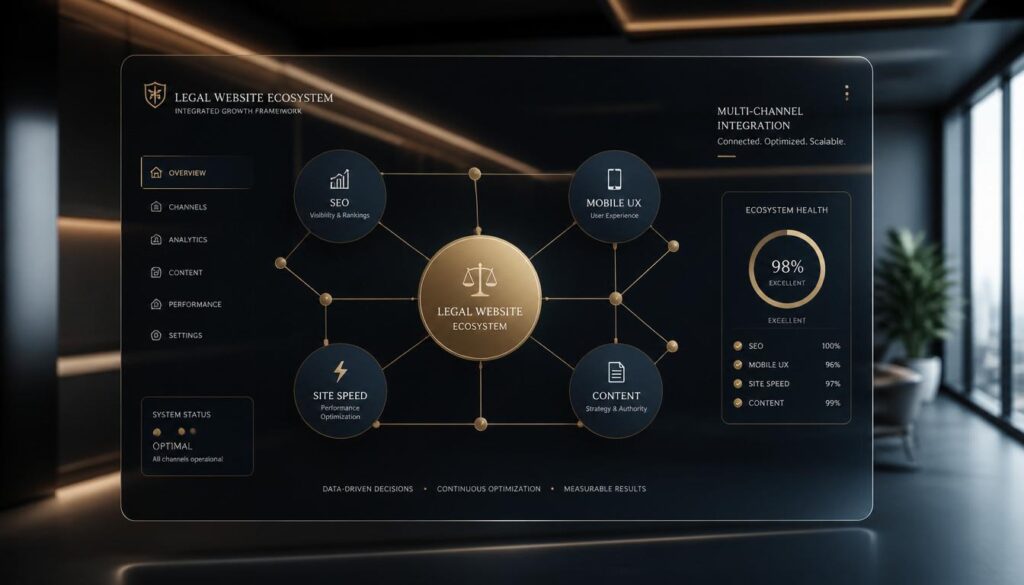
Multi-Channel Integration
A law firm website should connect with the firm’s broader digital marketing strategy.
Good websites integrate with:
- • Social media platforms
- • Email marketing campaigns
- • PPC advertising
- • YouTube channels
- • CRM systems
- • Online scheduling tools
Integrated marketing creates a smoother client journey.
For example, someone may first discover a law firm through social media before visiting the website later.
Consistent branding across channels improves recognition and trust.
Data Analytics And Performance Tracking
Successful law firms track website performance carefully.
Analytics tools help firms understand:
- • Traffic sources
- • User behavior
- • Conversion rates
- • Top-performing pages
- • Bounce rates
- • Search rankings
This data helps firms improve marketing strategies over time.
For example, if a practice area page receives heavy traffic but few leads, the firm may need stronger calls to action.
Continuous optimization allows firms to stay competitive.
Competitive Differentiation
Many law firm websites look similar.
A good website clearly communicates what makes the firm unique.
Differentiation may include:
- • Specific legal experience
- • Trial success
- • Client communication style
- • Local community involvement
- • Multilingual services
- • Industry focus
- • Personalized representation
Clear differentiation helps potential clients remember the firm.
Strong branding also improves long-term recognition.
Future-Proof Website Strategy
Technology and search behavior continue evolving rapidly.
A good law firm website in 2026 must remain adaptable.
Law firms should choose flexible website platforms that allow updates and scalability.
WordPress remains a popular option because it supports customization, SEO tools, and content management flexibility.
Future-proof websites also prioritize:
- • Mobile usability
- • AI compatibility
- • Security updates
- • Fast hosting
- • Scalable infrastructure
Firms that continue investing in digital improvements will likely maintain stronger online visibility over time.