
Why Is Your Medical Practice Website Not Converting Patients From Google Search?
Many medical practices invest heavily in SEO, Google Ads, social media, and content marketing. They may rank on Google for important keywords and attract website traffic every month. However, many doctors and healthcare organizations still struggle to turn those website visitors into actual patients.
This is one of the most frustrating problems in healthcare marketing. A practice may appear in Google search results, receive clicks, and even get strong traffic numbers, but appointment requests remain low. The problem is not always traffic. In many cases, the issue is conversion.
A medical practice website must do more than simply attract visitors. It must build trust, answer questions, reduce anxiety, and guide people toward taking action. If your website fails to do these things, patients may leave your site and contact another provider instead.
Understanding why your medical website is not converting patients from Google search can help you improve patient acquisition, increase appointment requests, and generate a better return on your marketing investment.
Your Website Loads Too Slowly
Website speed plays a major role in patient conversions. People searching for healthcare providers often need answers quickly. If your website takes too long to load, visitors may leave before viewing your services.
Slow websites create frustration. This is especially true on mobile devices where many healthcare searches now happen. Patients may search for terms like “family doctor near me,” “orthopedic surgeon,” or “urgent care clinic,” and expect immediate access to information.
Google also considers website speed as part of the user experience. A slow site can hurt both rankings and conversions.
Common causes of slow medical websites include:
- Large image files
- Poor hosting services
- Too many plugins
- Outdated website code
- Unoptimized videos
- Excessive scripts and animations
Improving speed can reduce bounce rates and keep patients engaged longer.
Your Website Looks Outdated
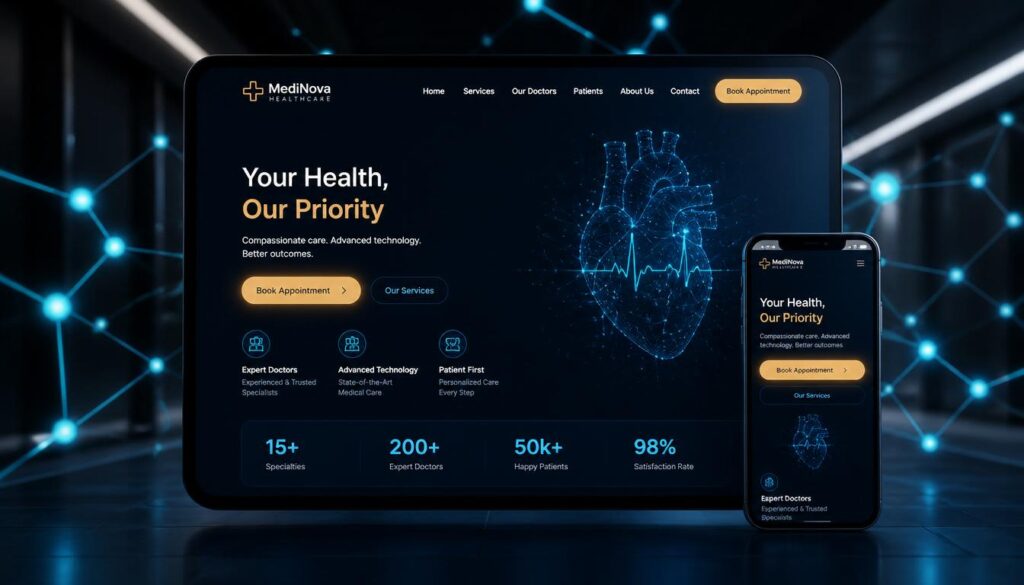
First impressions matter in healthcare marketing. Patients often judge the quality of a medical practice based on its website design.
An outdated website may create concerns about professionalism, credibility, and quality of care. If your website looks old, difficult to navigate, or visually cluttered, visitors may question whether your practice is modern and trustworthy.
A modern healthcare website should feel clean, organized, and easy to use. It should also reflect the professionalism of your medical practice.
Outdated websites often include:
- Small fonts
- Poor mobile layouts
- Low-quality images
- Confusing menus
- Broken links
- Old branding
- Excessive text blocks
Patients compare healthcare providers online before making decisions. If competing practices have stronger websites, they may win the patient.
Your Website Is Not Mobile-Friendly
Most healthcare-related searches now happen on smartphones. Patients search for symptoms, doctors, clinics, specialists, and treatment options while using mobile devices.
If your medical website is difficult to use on mobile phones, you may lose potential patients quickly.
Common mobile usability problems include:
- Tiny text
- Buttons that are hard to tap
- Slow loading pages
- Broken mobile layouts
- Difficult forms
- Popups covering content
- Horizontal scrolling
A mobile-friendly website should provide a smooth experience across all screen sizes. Patients should be able to call your office, request appointments, read reviews, and access directions easily.
Mobile optimization is no longer optional for healthcare websites.
Your Website Does Not Build Trust
Healthcare decisions involve trust. Patients want reassurance before choosing a doctor or medical practice.
Many medical websites focus heavily on services but fail to establish credibility. Patients may leave if they cannot quickly determine whether your practice is trustworthy.
Trust signals are extremely important in healthcare SEO and website conversion optimization.
Important trust-building elements include:
- Professional provider biographies
- Medical credentials
- Board certifications
- Patient reviews
- Testimonials
- Before-and-after photos where appropriate
- Hospital affiliations
- Awards and recognitions
- Real office photography
- HIPAA-compliant messaging
Patients also want to see the human side of your practice. Authentic photos and clear communication can help reduce anxiety and improve confidence.
Your Calls-To-Action Are Weak
A medical website should guide patients toward taking action. If visitors do not know what to do next, conversions may suffer.
Many healthcare websites have weak or unclear calls-to-action. Patients may not see where to book appointments, call the office, or request consultations.
Strong calls-to-action should be visible throughout the website.
Examples include:
- Schedule An Appointment
- Call Our Office Today
- Request A Consultation
- Book Online
- Speak With A Specialist
- Verify Insurance
- Contact Our Team
Buttons should stand out visually and appear in important areas of the website.
Patients should never struggle to figure out how to contact your practice.
Your Content Does Not Match Search Intent
Ranking on Google is only part of the process. Your website content must also satisfy patient expectations.
If someone searches for “knee replacement surgeon,” they expect detailed information about procedures, recovery, experience, outcomes, and next steps.
If your content is vague or unrelated to the search query, patients may leave immediately.
Content should align with the intent behind healthcare searches.
Different types of patient intent include:
- Informational searches
- Local searches
- Emergency searches
- Treatment comparison searches
- Insurance-related searches
- Symptom-related searches
- Specialist searches
When content fails to answer questions clearly, patients often return to Google and visit another website.
Your Website Has Too Much Medical Jargon
Doctors and healthcare professionals naturally use technical language. However, patients may not understand complex medical terminology.
A website overloaded with medical jargon can confuse visitors and reduce engagement.
Healthcare content should balance professionalism with clarity. Patients want understandable explanations about conditions, treatments, risks, and procedures.
Simple communication improves trust and helps patients feel more comfortable.
Instead of using overly technical language, explain concepts in plain English whenever possible.
For example, a patient may understand “heart doctor” more easily than “cardiovascular specialist.”
Readable content can significantly improve conversion rates.
Your Contact Information Is Difficult To Find
Patients searching online often want quick access to phone numbers, office locations, and appointment forms.
If contact information is hidden or inconsistent, visitors may abandon your website.
Your medical website should prominently display:
- Phone numbers
- Office addresses
- Office hours
- Appointment scheduling options
- Maps and directions
- Emergency contact instructions
Contact details should appear on every major page.
Consistency also matters for local SEO. Your practice name, address, and phone number should match across Google Business Profiles, directories, and your website.
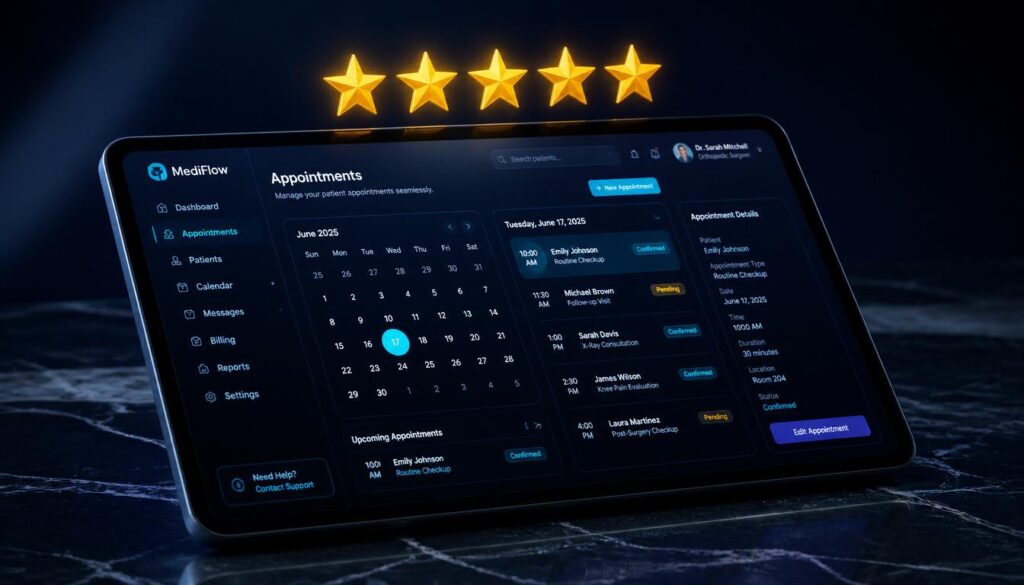
Your Appointment Process Is Complicated
Many healthcare websites create unnecessary barriers during the appointment process.
Long forms, confusing scheduling systems, or complicated patient portals can discourage conversions.
Patients want convenience. The easier it is to schedule an appointment, the more likely visitors will convert.
Common problems include:
- Too many required form fields
- Broken scheduling tools
- No online booking option
- Delayed responses
- Poor mobile form design
- Multiple redirects
A simple appointment system improves user experience and increases patient inquiries.
Your Website Lacks Local SEO Signals
Many patients search for providers within their local area. Local SEO plays a major role in healthcare visibility and patient acquisition.
If your website lacks strong local optimization, Google may not connect your practice with nearby searches.
Important local SEO elements include:
- City-specific pages
- Google Business Profile optimization
- Local keywords
- Embedded maps
- Consistent contact information
- Local backlinks
- Patient reviews
- Location schema markup
Patients often choose practices that appear prominently in local map results.
Without local SEO, your website may struggle to attract qualified nearby patients.
Your Website Does Not Address Patient Anxiety
Healthcare decisions can feel emotional and stressful. Patients may feel nervous about symptoms, procedures, costs, or diagnoses.
Many medical websites focus entirely on clinical information while ignoring emotional concerns.
Effective healthcare websites address patient fears directly.
Examples include:
- Explaining what to expect during visits
- Discussing recovery timelines
- Providing transparent information
- Offering supportive messaging
- Sharing patient success stories
- Explaining insurance and payment options
Reducing uncertainty can improve patient confidence and increase conversions.
Your Competitors Have Better Websites
Patients rarely visit only one medical website before making decisions. They often compare multiple providers.
If competing practices provide a better digital experience, patients may choose them instead.
Competitor advantages may include:
- Better design
- Faster loading speeds
- Stronger reviews
- More educational content
- Better SEO
- Easier scheduling
- More visible trust signals
- More engaging videos
Healthcare marketing is highly competitive in many specialties and cities.
Your website must compete not only for rankings but also for patient trust.
Your Website Has Poor Navigation
Patients should find information quickly and easily.
Confusing navigation frustrates visitors and increases bounce rates.
Common navigation problems include:
- Too many menu options
- Hidden service pages
- Broken links
- Poor menu organization
- Confusing terminology
- Excessive dropdown menus
A healthcare website should guide visitors naturally toward important information.
Key sections should include:
- Services
- Conditions treated
- Provider biographies
- Insurance information
- Contact details
- Appointment scheduling
- Patient resources
Simple navigation improves the patient experience.
Your Website Does Not Showcase Reviews
Online reviews strongly influence healthcare decisions.
Many patients trust reviews almost as much as personal recommendations.
If your website lacks visible patient feedback, visitors may hesitate to contact your practice.
Positive reviews help build credibility and social proof.
You can showcase:
- Google reviews
- Video testimonials
- Written testimonials
- Patient success stories
- Case studies where appropriate
Authentic feedback reassures potential patients and supports conversion efforts.
Your SEO Traffic Is Unqualified
Not all traffic leads to patients.
Some medical practices attract visitors who are not ready to book appointments. Others rank for keywords unrelated to profitable services.
For example, informational blog traffic may generate page views but few patient inquiries.
A strong healthcare SEO strategy should target:
- High-intent local keywords
- Treatment-related searches
- Procedure-specific searches
- Insurance-related searches
- Symptom searches tied to services
Quality matters more than raw traffic volume.
Attracting the right visitors improves conversion rates.
Your Website Does Not Use Clear Service Pages
Many healthcare websites combine multiple services onto one page.
This creates confusion for both patients and search engines.
Dedicated service pages help explain treatments clearly and improve SEO performance.
Each service page should include:
- Symptoms treated
- Procedure explanations
- Benefits
- Risks and recovery information
- FAQs
- Provider experience
- Calls-to-action
Clear service pages help patients understand their options and encourage appointment requests.
Your Website Ignores Patient Questions
Patients often search online because they have questions.
If your website fails to answer common concerns, visitors may continue searching elsewhere.
Frequently asked questions can improve both SEO and conversions.
Important healthcare FAQ topics include:
- Insurance accepted
- Treatment costs
- Recovery time
- Appointment preparation
- Side effects
- Telehealth availability
- Wait times
- Referral requirements
Answering questions directly helps patients feel informed and confident.
Your Website Does Not Feature Video Content
Video can improve engagement and trust.
Patients often prefer watching a doctor explain treatments rather than reading long paragraphs.
Healthcare video content may include:
- Doctor introductions
- Procedure explanations
- Office tours
- Patient testimonials
- Educational content
- Frequently asked questions
Videos can humanize your practice and help patients feel more comfortable.
They may also increase the amount of time visitors spend on your website.
Your Website Is Not HIPAA-Conscious
Patients care about privacy and data security.
If your website appears insecure or outdated, visitors may hesitate to submit personal information.
Healthcare websites should prioritize:
- Secure HTTPS encryption
- HIPAA-conscious forms
- Privacy policies
- Secure patient communication systems
- Clear consent practices
A trustworthy digital experience supports both compliance and patient confidence.
Your Website Does Not Highlight Insurance Information
Insurance concerns affect many healthcare decisions.
Patients often want to know whether a practice accepts their insurance before scheduling appointments.
If insurance information is difficult to find, patients may move on to another provider.
Helpful insurance content includes:
- Accepted insurance plans
- Financing options
- Payment plans
- Self-pay information
- Billing FAQs
Transparency reduces uncertainty and improves conversion opportunities.
Your Analytics Are Incomplete
Many medical practices do not properly track website performance.
Without analytics, it becomes difficult to identify conversion problems.
Important healthcare website metrics include:
- Bounce rates
- Conversion rates
- Mobile usability
- Traffic sources
- Appointment requests
- Phone call tracking
- Landing page performance
- User behavior flow
Analytics can reveal which pages perform well and which areas need improvement.
Data-driven decisions lead to better website optimization.
Your Website Does Not Create Urgency
Some healthcare situations require prompt action.
If your website lacks urgency, patients may delay contacting your practice.
Effective healthcare messaging can encourage action without sounding aggressive.
Examples include:
- Same-day appointments available
- Early diagnosis matters
- Limited consultation openings
- Don’t ignore persistent symptoms
- Fast appointment scheduling
Urgency should feel supportive rather than overly sales-focused.
Your Website Is Missing Strong Homepage Messaging
The homepage is often the first impression patients receive.
Many healthcare homepages fail to communicate essential information quickly.
Within seconds, patients should understand:
- What your practice does
- Which conditions you treat
- Where you are located
- Why patients should trust you
- How to schedule appointments
Weak homepage messaging creates confusion and increases bounce rates.
A strong homepage should immediately guide patients toward the next step.
Your Website Does Not Differentiate Your Practice
Many medical websites sound identical.
Generic statements like “high-quality care” or “experienced doctors” are not enough to stand out.
Patients want to understand what makes your practice unique.
Differentiators may include:
- Specialized expertise
- Advanced technology
- Faster appointment availability
- Personalized care
- Multilingual staff
- Unique treatment methods
- Convenient locations
- Telehealth services
Clear differentiation helps patients choose your practice over competitors.
Your Website Is Focused On The Practice Instead Of The Patient
Some medical websites talk too much about the organization and not enough about patient needs.
Patients care about outcomes, convenience, comfort, and solutions.
Instead of focusing entirely on the practice, your website should explain how you help patients solve problems.
Patient-centered messaging often converts better because it speaks directly to visitor concerns.